
6 Best AI Legal Research Tools in 2026
Quick answer: Legal research tools live or die on the corpus behind them, not on the model in front. Lexis+ AI and Westlaw sit on proprietary case law nobody else licenses, which is why they cost from roughly $3,000 per user a year and why firms keep paying. CoCounsel is reported from around $4,500 per user a year and is strongest when research sits alongside document work. Harvey targets large firms across practice areas at a reported $50,000 upwards. If your question is about contracts rather than case law, this is the wrong category.
Comparison
| Tool | Score | Best for | Price | Key strength |
|---|---|---|---|---|
| Lexis+ AI | 9.4 | firms already on the LexisNexis corpus | Reported ~$3,000 to $8,000 per user/yr | Licensed primary law with citation validation |
| Westlaw Precision | 8.5 | firms already on the Westlaw corpus | No published price | KeyCite and headnote depth |
| CoCounsel | 7.7 | research alongside document review and drafting | Reported from ~$4,500 per user/yr | Research and document work in one |
| Harvey | 6.9 | large firms buying across practice areas | Reported ~$50,000 to $290,000/yr | Breadth across legal work |
| vLex Vincent | 6.0 | research spanning multiple jurisdictions | No published price | International coverage |
| Paxton AI | 5.2 | small firms priced out of the incumbents | No published price | Lowest entry point in the category |
Fit by buyer
Scored 1 to 5 for each buyer, where 5 means the tool was built for them and 1 means it is the wrong tool. Scope is different: it is how much of the job the tool does, from a single step to a whole lifecycle, and a low score there means narrow rather than bad. These ratings are the same for a tool wherever it appears; the score shown beside each entry is for this guide specifically. A tool can lead one column and come last in another, and the right answer still changes with who is asking. How we score.
| Tool | Lawyer in Word | In-house legal | Commercial team | Enterprise | Scope | Price |
|---|---|---|---|---|---|---|
| Lexis+ AI | 4 | 4 | 1 | 4 | 4 | Reported |
| Westlaw Precision | 4 | 4 | 1 | 4 | 4 | None |
| CoCounsel | 4 | 4 | 1 | 3 | 4 | Reported |
| Harvey | 4 | 3 | 1 | 4 | 4 | Reported |
| vLex Vincent | 4 | 3 | 1 | 3 | 4 | None |
| Paxton AI | 3 | 3 | 1 | 2 | 3 | None |
Which one, for your situation
| If this is your situation | Start with |
|---|---|
| You need US case law with citation checking and already use Lexis | Lexis+ AI |
| You need US case law and already use Westlaw | Westlaw Precision |
| Research sits alongside drafting and document review in the same day | CoCounsel |
| You are a large firm buying across several practice areas at once | Harvey |
| You need coverage outside the US and UK | vLex Vincent |
| You are a small firm and the incumbents are out of budget | Paxton AI |
The 6 best AI legal research tools
1. Lexis+ AI: Best for firms already on the LexisNexis corpus
9.4 out of 10 how this is calculated
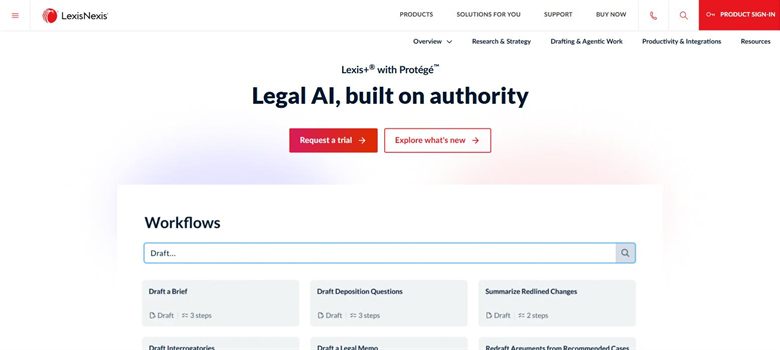
The verdict: The corpus is the product. Shepard's citation validation is the thing genuinely hard to replicate, and it is why firms tolerate the price and the sales process.
Pricing: No public list price. Reported at approximately $3,000 to $8,000 per user a year for core services, with specialist modules charged separately. The database licence and the AI layer are usually priced as one.
Standout features:
- Licensed case law, statutes and secondary sources
- Shepard's citation validation
- Answers linked to the underlying authority
- Broad US coverage with international modules
Limitations: Priced per user per year on top of a database subscription, which puts it out of reach for small firms and most in-house teams. Coverage outside the US and UK is patchier than the marketing suggests, and the interface carries decades of accumulated complexity.
2. Westlaw Precision: Best for firms already on the Westlaw corpus
8.5 out of 10 how this is calculated
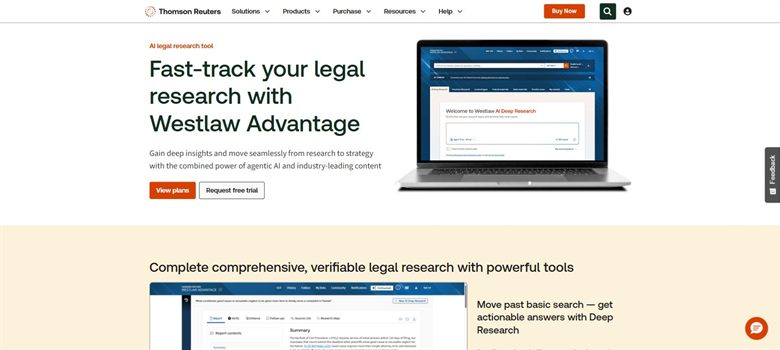
The verdict: The other half of the duopoly. The editorial layer, headnotes and KeyCite, is a century of human work that no model has replicated, and that is what you are buying.
Pricing: No published price and no reliable reported figure we could source. Sold per user per year alongside a Westlaw subscription, and quoted on firm size and practice areas. We would rather say that than print a number we cannot stand behind.
Standout features:
- Licensed case law with editorial headnotes
- KeyCite treatment flags
- AI answers grounded in the licensed corpus
- Practice-area specific research tools
Limitations: No published pricing at all, so budgeting requires a sales process. Like Lexis, it assumes you are a firm with a database subscription, and the AI features are an addition to that cost rather than a replacement for it.
3. CoCounsel: Best for research alongside document review and drafting
7.7 out of 10 how this is calculated
The verdict: Useful because legal work is rarely only research. Handles document review, summarisation and drafting alongside it, which suits a lawyer whose day is not neatly divided.
Pricing: Sales-led and tiered by database access. Third-party reports put entry around $4,500 per user a year, rising substantially with Practical Law or Westlaw access. These figures are directional, so get a written quote.
Standout features:
- Research, review, summarisation and drafting in one product
- Access to Westlaw and Practical Law at higher tiers
- Document comparison and deposition preparation
- Firm-wide deployment
Limitations: The price depends heavily on which database tier you take, so quoted figures vary widely and comparisons are difficult. Buying it purely for research means paying for document features you may not use.
4. Harvey: Best for large firms buying across practice areas
6.9 out of 10 how this is calculated
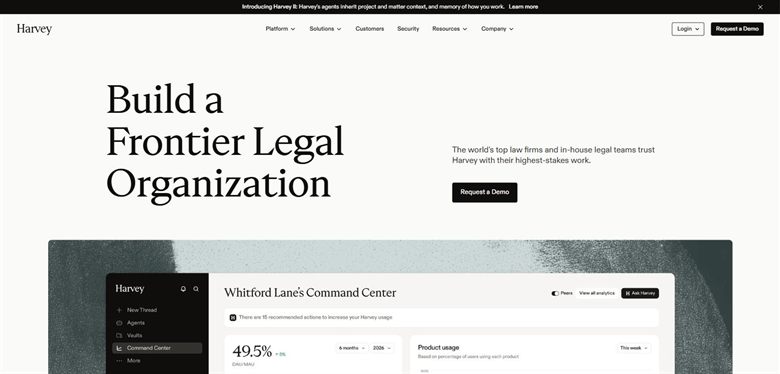
The verdict: Sold as firm infrastructure rather than a research subscription. The deployment is a project, and the price assumes a partnership signing off on it.
Pricing: No public list price. Reported annual contracts run approximately $50,000 to $290,000 depending on firm size and practice-area coverage.
Standout features:
- Coverage across multiple practice areas
- Research, drafting and analysis in one system
- Firm knowledge management
- Custom workflows per practice group
Limitations: The buying process is long and the price assumes a firm rather than a team. It also does not license the Lexis or Westlaw corpora, so authority-heavy research still routes back to an incumbent subscription.
5. vLex Vincent: Best for research spanning multiple jurisdictions
6.0 out of 10 how this is calculated
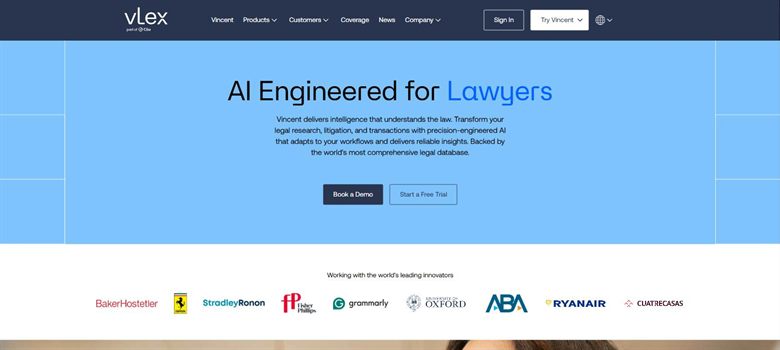
The verdict: The one to look at when the question crosses borders. Coverage across a large number of jurisdictions is genuinely broader than the US incumbents, which matters more than model quality for that use.
Pricing: No published price and no reliable reported figure we could source. Sold per user with pricing that varies by jurisdiction coverage.
Standout features:
- Coverage across many jurisdictions
- Cross-border comparison of legal concepts
- Answers linked to source documents
- Now part of Clio following acquisition
Limitations: Depth in any single jurisdiction is generally below Lexis or Westlaw in their home markets, so it complements rather than replaces them for US-only work. No published pricing.
6. Paxton AI: Best for small firms priced out of the incumbents
5.2 out of 10 how this is calculated
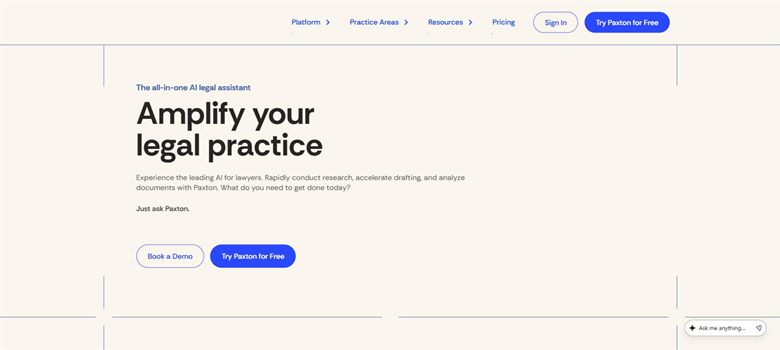
The verdict: Exists because Lexis and Westlaw price small firms out. Whether the corpus is deep enough depends entirely on your practice area, and that is the question to test before committing.
Pricing: No published list price and no reliable reported figure we could source. Positioned well below the incumbents, and sold per user.
Standout features:
- Priced for solo and small firms
- Citation-linked answers
- Document analysis alongside research
- US case law focus
Limitations: Does not license the proprietary editorial layers that make Shepard's and KeyCite valuable, so citation treatment is weaker. Coverage is narrower than the incumbents and its own pricing is not published.
How we chose
- The corpus: does the tool license primary law, or search the open web and hope?
- Citation behaviour: does it link every proposition to a source you can open and verify?
- Jurisdiction coverage, and whether it is honest about where it is thin.
- Whether it is sold to firms, to in-house teams, or to both.
- Published price, and whether the database licence is separate from the AI licence.
- We did not score on model choice. Which foundation model sits underneath matters far less than what it is allowed to read.
Frequently asked questions
What is the best AI legal research tool in 2026?
For US case law with citation validation, Lexis+ AI and Westlaw Precision remain the serious answers, because they license primary law and the editorial layers built on top of it. CoCounsel suits lawyers whose research sits alongside document work. For cross-border questions, vLex Vincent covers more jurisdictions.
How much does AI legal research software cost?
Lexis+ AI is reported at roughly $3,000 to $8,000 per user a year and CoCounsel from around $4,500. Harvey is reported from $50,000 a year upwards as a firm deployment. Westlaw, vLex and Paxton publish nothing and we could not source reliable figures for them.
Can AI legal research be trusted for citations?
Only where the tool links every proposition to a source you can open. The failure mode that produced sanctions in real cases was a general chatbot generating plausible citations to authorities that did not exist. Tools licensing primary law and surfacing the underlying document are a different proposition, but the check is the same: open the case.
Is Lexis or Westlaw better for AI research?
They are close, and the honest answer is usually whichever corpus your firm already subscribes to. Shepard's and KeyCite do the same job differently, and the switching cost, in habits and in training, generally exceeds the difference in AI quality.
Do in-house legal teams need AI legal research?
Usually less than firms do. In-house work is weighted towards contracts, advice and process rather than authority-heavy research, so a per-user research subscription is often poor value. A contract-focused tool tends to serve the day better.
Is there a free AI legal research tool?
Not with licensed primary law. Free options search publicly available material, which excludes the editorial layers and much of the case law that makes research reliable. Free tiers exist for adjacent tasks, but not for authority.
Can general AI models do legal research?
They can produce something that reads like legal research. Without a licensed corpus they cannot reliably distinguish good law from overturned law, and they have no citation treatment. That gap is the entire reason the incumbents can charge what they charge.