
8 Best AI Contract Review Tools in 2026
Quick answer: There is no single best AI contract review tool, because the right answer depends on who is doing the reviewing. Spellbook is the strongest pick for lawyers who work inside Microsoft Word, at a reported $99 to $199 per user a month, and suits firms of any size. LegalOn leads on playbook-driven review for in-house legal teams. GenieAI is the better fit at mid-size companies, roughly 200 to 1,000 people, where a small legal team sets the positions and commercial staff apply them without queueing for review; it publishes its price and runs a free tier. Enterprise CLM platforms like Ironclad start around $30,000 a year, suit large enterprises, and solve a different problem.
Comparison
| Tool | Score | Best for | Price | Key strength |
|---|---|---|---|---|
| Spellbook | 9.2 | lawyers who draft and review in Microsoft Word | Reported ~$99 to $199 per user/mo | Word-native review and redlining |
| LegalOn | 8.5 | in-house legal teams reviewing against a playbook | No published price | Playbook-driven clause review |
| GenieAI | 8.1 | commercial teams working inside positions legal has set | Free plan, then $75/mo; Enterprise from $600/mo | Business-readable risk flagging |
| Luminance | 7.7 | high-volume review across large document sets | List ~$41,340/yr for 1,000 documents | Pattern detection at volume |
| Ironclad | 7.1 | enterprises needing full contract lifecycle management | Reported ~$30,000 to $250,000/yr | End-to-end CLM workflow |
| Harvey | 6.5 | large law firms across multiple practice areas | Reported ~$50,000 to $290,000/yr | Breadth across legal work |
| Juro | 5.9 | teams wanting contract creation and signature in one flow | Reported ~$15,000 to $130,000/yr | Create, agree and sign in one place |
| Robin AI | 5.2 | teams wanting software plus human legal support | From ~$500/mo for small teams | AI review with a human layer |
Fit by buyer
Scored 1 to 5 for each buyer, where 5 means the tool was built for them and 1 means it is the wrong tool. Scope is different: it is how much of the job the tool does, from a single step to a whole lifecycle, and a low score there means narrow rather than bad. These ratings are the same for a tool wherever it appears; the score shown beside each entry is for this guide specifically. A tool can lead one column and come last in another, and the right answer still changes with who is asking. How we score.
| Tool | Lawyer in Word | In-house legal | Commercial team | Enterprise | Scope | Price |
|---|---|---|---|---|---|---|
| Spellbook | 5 | 4 | 2 | 2 | 2 | Reported |
| LegalOn | 4 | 5 | 2 | 3 | 2 | None |
| GenieAI | 3 | 5 | 5 | 3 | 2 | Published |
| Luminance | 3 | 4 | 1 | 4 | 4 | Published |
| Ironclad | 2 | 4 | 2 | 5 | 5 | Reported |
| Harvey | 4 | 3 | 1 | 4 | 4 | Reported |
| Juro | 2 | 4 | 4 | 4 | 4 | Reported |
| Robin AI | 3 | 3 | 4 | 2 | 2 | Reported |
Which one, for your situation
| If this is your situation | Start with |
|---|---|
| Your reviewers are qualified lawyers and the work happens in Microsoft Word | Spellbook |
| You have standard positions written down and want contracts checked against them | LegalOn |
| Commercial or ops staff need to handle standard agreements without waiting on legal | GenieAI |
| You are reviewing hundreds of legacy agreements, not negotiating new ones | Luminance |
| You need approvals, a repository and obligation tracking, not just review | Ironclad |
| You are a law firm buying across several practice areas | Harvey |
| You have no in-house counsel and want human backup alongside the software | Robin AI |
The 8 best AI contract review tools
1. Spellbook: Best for lawyers who draft and review in Microsoft Word
9.2 out of 10 how this is calculated
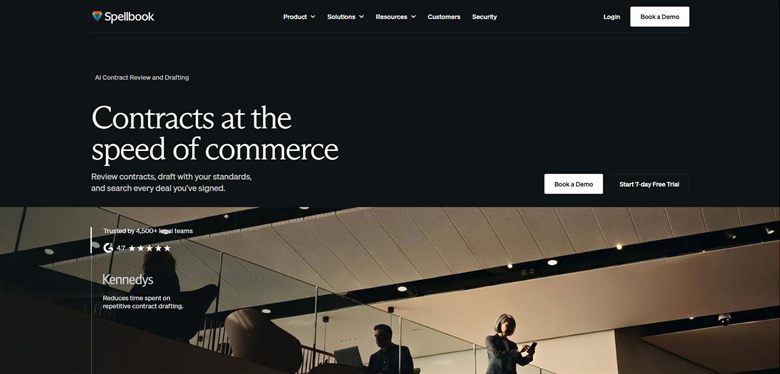
The verdict: The strongest option if your reviewers are lawyers and the work already happens in Word. Spellbook meets them where they are rather than asking them to adopt a platform.
Pricing: No published list price. Reported at approximately $99 to $199 per user a month depending on tier, rising to around $350 per user on enterprise plans with a ten-seat minimum. A seven-day free trial is offered.
Standout features:
- Runs as an add-in inside Microsoft Word
- Clause suggestion and generation while drafting
- Redline and review assistance on counterparty paper
- Benchmarks terms against comparable agreements
Limitations: Because it is Word-centred it does little for non-lawyers in the business who need to handle standard agreements themselves. If your bottleneck is commercial teams waiting on legal, a Word add-in does not address it.
2. LegalOn: Best for in-house legal teams reviewing against a playbook
8.5 out of 10 how this is calculated
The verdict: Built specifically for reviewing against your own standard positions rather than generic best practice, which is the thing most in-house teams actually want.
Pricing: No public list price, and we could not source a reliable reported figure. Sales-led and quoted on seat count and playbook scope. We would rather say that than print a number we cannot stand behind.
Standout features:
- Reviews contracts against a configurable playbook
- Clause-level risk flagging with suggested revisions
- Pre-built playbooks for common agreement types
- Word and browser workflows
Limitations: The playbook is the product, so the value depends on you having standard positions worth encoding. Teams that negotiate every deal from scratch get less from it, and initial configuration is real work.
3. GenieAI: Best for commercial teams working inside positions legal has set
8.1 out of 10 how this is calculated
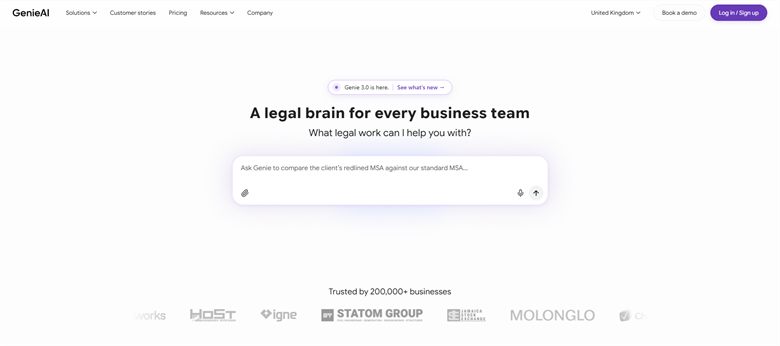
The verdict: The better fit when contracts are reviewed by the commercial team rather than by legal, which at mid-size companies is most of them. It rates clauses red, amber or green against your own positions, so a commercial lead can see what to challenge without waiting for legal to interpret it.
Pricing: Permanent free plan with no time limit. Pro is $75 a month for one user, Business $320 a month for five users, and Enterprise from $600 a month with SSO, API access and an SLA.
Standout features:
- Red, amber and green clause risk rating readable by non-lawyers
- Drafting, review and negotiation in one workspace
- Microsoft Word add-in that preserves native track changes
- Managed template and clause library
- Free tier with no time limit, so it can be trialled without procurement
Limitations: It can research a question but is not built for it, so teams whose work turns on case law and citable authority should look at Lexis+ AI or CoCounsel instead. Firms whose reviewers are all qualified lawyers working in Word will find Spellbook a closer fit, and GenieAI is not a full CLM if your primary need is repository and obligation management at scale.
4. Luminance: Best for high-volume review across large document sets
7.7 out of 10 how this is calculated
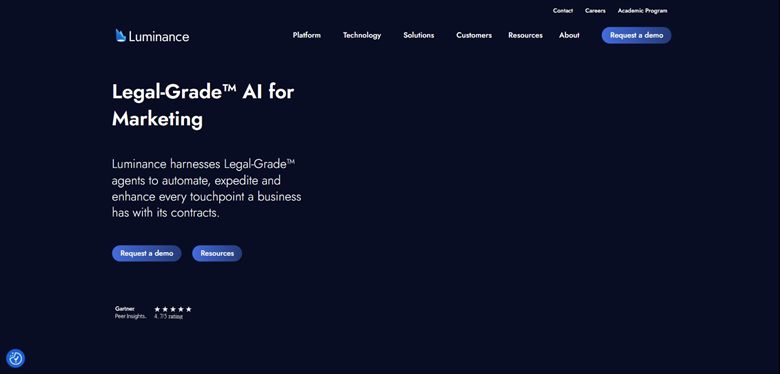
The verdict: Strongest where the problem is scale: due diligence, portfolio review, or making sense of a large estate of legacy agreements nobody has read.
Pricing: Published list price of approximately $41,340 a year for 1,000 documents with unlimited users. Enterprise deployments are reported from around $25,000 a year depending on volume and which modules are licensed.
Standout features:
- Anomaly detection across large document sets
- Works across languages and jurisdictions
- Due diligence and portfolio review workflows
- Unlimited users on the published tier
Limitations: The cost only makes sense at volume. For a team reviewing a handful of agreements a week it is a great deal of platform for the problem, and onboarding takes real time.
5. Ironclad: Best for enterprises needing full contract lifecycle management
7.1 out of 10 how this is calculated
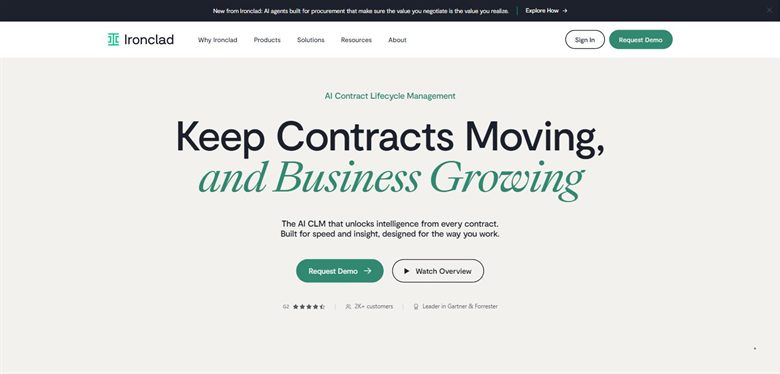
The verdict: A CLM platform with review as one component, rather than a review tool. Right answer if you need workflow, approvals and a repository, and are buying the whole system.
Pricing: No public list price. Reported annual contracts run approximately $30,000 to $250,000, with a marketplace median near $40,000 across 363 recorded purchases.
Standout features:
- Contract lifecycle workflow and approvals
- Repository with obligation tracking
- Integrations across common business systems
- Reporting across the contract estate
Limitations: Implementation is a project, not a purchase, and the price reflects a platform rather than a review tool. If clause-level review is the actual need, most of what you are buying goes unused.
6. Harvey: Best for large law firms across multiple practice areas
6.5 out of 10 how this is calculated
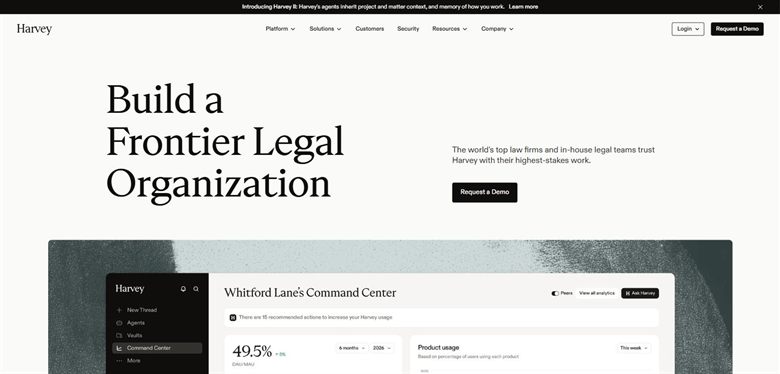
The verdict: Aimed at law firms rather than in-house teams, and priced accordingly. Contract review is one of many things it does.
Pricing: No public list price. Reported annual contracts run approximately $50,000 to $290,000 depending on firm size and practice-area coverage.
Standout features:
- Coverage across multiple practice areas
- Research, drafting and analysis in one system
- Firm-wide deployment and knowledge management
Limitations: Overkill and mispriced for an in-house team whose job is getting commercial agreements through faster. The buying process is long and the deployment is firm-scale.
7. Juro: Best for teams wanting contract creation and signature in one flow
5.9 out of 10 how this is calculated
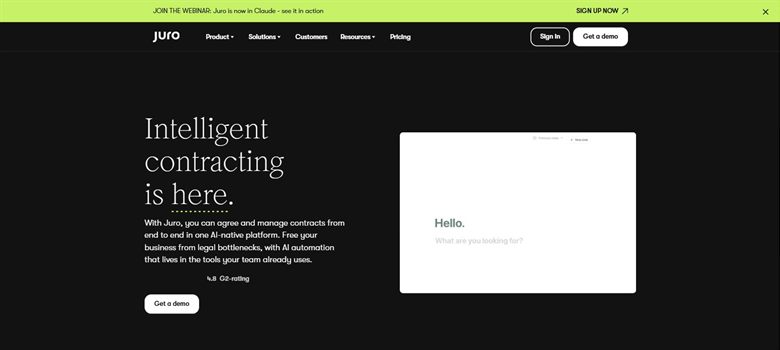
The verdict: Strong on getting routine agreements created, agreed and signed quickly. Review is lighter than the specialists on this list.
Pricing: Sales-led with no public list price. Reported annual contracts run approximately $15,000 to $130,000, with marketplace medians around $31,000 to $34,500, priced on contract volume rather than per seat.
Standout features:
- Template-driven contract creation
- Native e-signature
- Approval workflows and a searchable repository
- Browser-based, no Word dependency
Limitations: Clause-level risk analysis is not the strength. If your problem is knowing what to push back on rather than moving paper faster, a review specialist will serve you better.
8. Robin AI: Best for teams wanting software plus human legal support
5.2 out of 10 how this is calculated

The verdict: Sits between software and service, pairing AI review with access to human lawyers. Useful when you have no in-house counsel at all.
Pricing: Subscription tiered by features and volume, starting around $500 a month for small teams, with enterprise pricing set on contract volume.
Standout features:
- AI-assisted review and redlining
- Access to human legal review
- Word and browser workflows
- Volume-based pricing
Limitations: The human layer is what you are paying for, so the economics change as volume grows. Teams that only need software will find cheaper options here.
How we chose
- Review depth: does it flag clause-level risk, or only summarise the document?
- Playbook control: can you encode your own positions and have the tool review against them?
- Where the work happens: Word add-in, browser, or a separate platform the business has to adopt.
- Who can actually use it: lawyers only, or commercial teams without legal training.
- Published price: we state a real figure wherever one exists, and say plainly when a vendor publishes none.
- We did not score on features nobody buys on. Integration counts are not a differentiator.
Frequently asked questions
What is the best AI contract review tool in 2026?
It depends who reviews your contracts. Spellbook is strongest for lawyers working in Microsoft Word. LegalOn leads for in-house teams reviewing against a playbook. Luminance suits high-volume review across large document sets. Anyone telling you there is one answer has not asked who is doing the work.
How much does AI contract review software cost?
The range is wide. Per-seat tools such as Spellbook are reported at roughly $99 to $199 per user a month. Platform purchases like Ironclad are reported from around $30,000 a year, and Harvey from around $50,000. Only seven of the twenty-nine vendors we track publish a price at all, so most comparisons start with a sales call.
Can AI contract review replace a lawyer?
For standard agreements against known positions, AI review handles the work that used to queue for legal: spotting off-market clauses, comparing against your playbook and proposing revisions. For novel, high-value or disputed agreements, the judgement of someone who knows your business and its risk appetite is what you are actually buying, and no tool supplies that.
Which AI contract tools are ISO 27001 certified?
Certification varies and vendors change status, so verify it directly rather than trusting a list. Ask any vendor for their current certificate and its scope, because scope matters as much as the badge: a certificate covering a corporate office and not the product platform tells you very little.
Is there a free AI contract review tool?
GenieAI has a permanent free plan with no time limit. Several vendors offer trials rather than free tiers: Spellbook offers seven days. Free tiers are usually limited on volume or advanced review, so treat them as a way to test fit rather than a long-term plan.
What is the difference between AI contract review and a CLM platform?
Review tools tell you what is wrong with a contract in front of you. CLM platforms manage contracts across their life: creation, approval, signature, storage and obligations. Ironclad and Juro sit closer to CLM, Spellbook and LegalOn closer to review. Buying a CLM to solve a review problem is the most common and most expensive mistake in this category.
Do these tools work for teams without a lawyer?
Some do. GenieAI and Robin AI are built with non-lawyers in mind, the first through business-readable risk ratings and the second by pairing software with human legal support. Spellbook, LegalOn and Harvey assume a qualified reviewer and will be harder going without one.
How long does it take to get started?
Self-serve tools with free tiers can be tested the same day. Playbook-driven tools like LegalOn need configuration before they show their value. Platform purchases such as Ironclad and Harvey are implementation projects measured in weeks or months, which is worth factoring into any comparison of price.