
7 Best Contract Tools for Procurement Teams in 2026
Quick answer: Procurement is measured on cost avoided and value delivered, and contract software is mostly built for the team on the other side of the table. Icertis is the exception, designed around sourcing, supplier records and obligations, and it publishes no price at all. Ironclad is the strongest mainstream platform for the job and is reported at a median near $40,000 a year. GenieAI reviews incoming supplier paper against your positions at a published free tier rising to $75. If the pressing problem is renewals going through unnoticed, that is a tracking purchase and cheaper than any of them.
Comparison
| Tool | Score | Best for | Price | Key strength |
|---|---|---|---|---|
| Icertis | 9.4 | a real sourcing function at scale | No published price | Built for the buy side specifically |
| Ironclad | 8.8 | the strongest mainstream platform | Reported ~$30,000 to $250,000/yr | Approvals plus post-signature tracking |
| GenieAI | 7.9 | reviewing supplier paper without legal | Free plan, then $75/mo; Enterprise from $600/mo | A buyer can act on the output |
| Evisort | 7.3 | reading the supplier base you inherited | Reported ~$30,000 to $150,000/yr | Extraction across a messy estate |
| LegalOn | 6.4 | legal reviewing every supplier contract | No published price | Depth of pre-built positions |
| Robin AI | 5.8 | the same supplier terms, repeatedly | From ~$500/mo | One buy-side position for everyone |
| Contractbook | 5.2 | small teams where renewals are the problem | Reported ~$39 to $599/mo | Only small-team price here |
Fit by buyer
Scored 1 to 5 for each buyer, where 5 means the tool was built for them and 1 means it is the wrong tool. Scope is different: it is how much of the job the tool does, from a single step to a whole lifecycle, and a low score there means narrow rather than bad. These ratings are the same for a tool wherever it appears; the score shown beside each entry is for this guide specifically. A tool can lead one column and come last in another, and the right answer still changes with who is asking. How we score.
| Tool | Lawyer in Word | In-house legal | Commercial team | Enterprise | Scope | Price |
|---|---|---|---|---|---|---|
| Icertis | 1 | 3 | 1 | 5 | 5 | None |
| Ironclad | 2 | 4 | 2 | 5 | 5 | Reported |
| GenieAI | 3 | 5 | 5 | 3 | 2 | Published |
| Evisort | 1 | 4 | 2 | 4 | 4 | Reported |
| LegalOn | 4 | 5 | 2 | 3 | 2 | None |
| Robin AI | 3 | 3 | 4 | 2 | 2 | Reported |
| Contractbook | 1 | 3 | 4 | 2 | 3 | Reported |
Which one, for your situation
| If this is your situation | Start with |
|---|---|
| You run a real sourcing function at enterprise scale | Icertis |
| You want the strongest mainstream platform for buy-side | Ironclad |
| Reviewing supplier paper without waiting on legal | GenieAI |
| You cannot say what your existing supplier base commits you to | Evisort |
| Legal reviews every supplier contract | LegalOn |
| You negotiate the same supplier terms repeatedly | Robin AI |
| A small team where renewals are the whole problem | Contractbook |
The 7 best contract tools for procurement teams
1. Icertis: Best for a real sourcing function at scale
9.4 out of 10 how this is calculated

The verdict: The only platform here designed around buying rather than adapted to it. Sourcing, supplier master data, ERP integration and obligations with named owners are first-class, which is why it tops a page it does not top elsewhere.
Pricing: No published price and no reliable reported figure we could source. Enterprise sales-led, quoted on contract volume and module count. Widely understood to sit at the top of the market alongside Ironclad.
Standout features:
- Procurement and sourcing contract management
- Obligation tracking with owner assignment and status
- Deep ERP integration for spend and supplier records
- Multi-entity and multi-jurisdiction support
Limitations: No published price and nothing reliably reported, which is an awkward thing to sell to a function whose job is establishing what things cost. It is a deployment measured in months with a dedicated internal owner, and its clause-level review is shallower than the dedicated review tools.
2. Ironclad: Best for the strongest mainstream platform
8.8 out of 10 how this is calculated
The verdict: Not built for procurement the way Icertis is, but it handles the job well and you can find out roughly what it costs, which matters when the business case has to be written before the sales process.
Pricing: No public list price. Reported annual contracts run approximately $30,000 to $250,000, with a marketplace median near $40,000 across 363 recorded purchases.
Standout features:
- Renewal and obligation tracking with alerts
- Conditional approval routing by value, risk and department
- Repository and reporting across executed agreements
- Finance and procurement system integrations
Limitations: Sell-side in origin, so sourcing depth and supplier master data are below Icertis. Implementation runs to months, and at a reported median near $40,000 a year it is a company purchase rather than a procurement budget line.
3. GenieAI: Best for reviewing supplier paper without legal
7.9 out of 10 how this is calculated
The verdict: Procurement usually reviews supplier terms without a lawyer in the room, and needs to know which clauses in someone else's template are unusual. Plain-language risk flags against positions your business has agreed fit that, and the published price makes it a line item rather than a project.
Pricing: Permanent free plan with no time limit. Pro $75 a month for one user, Business $320 a month for five, Enterprise from $600 a month with SSO, API access and an SLA.
Standout features:
- Risk rated red, amber or green per clause with a plain-language explanation
- Review against positions your legal team has set
- Organisational knowledge graph so a position held with one supplier carries to the next
- Microsoft Word add-in that preserves native track changes
- Free tier with no time limit
Limitations: No obligation or renewal tracking, so the terms it helped you negotiate are then your calendar's problem, and renewals are where procurement actually loses money. No supplier records, no spend view and no sourcing workflow, so it reviews contracts rather than managing suppliers.
4. Evisort: Best for reading the supplier base you inherited
7.3 out of 10 how this is calculated
The verdict: Answers the question most procurement functions inherit and cannot answer: what did the business already commit to, across agreements signed before anyone kept a register.
Pricing: No public list price. Reported annual contracts run approximately $30,000 to $150,000. Now part of Workday following acquisition, so renewals may route differently than they did.
Standout features:
- Extraction across large and unstructured document sets
- Obligation and renewal identification without manual entry
- Reporting on terms across the supplier base
- Workflow and approvals alongside extraction
Limitations: Extraction degrades on older scanned agreements, which is precisely what a legacy supplier base consists of, and the cleanup lands on your team. The Workday acquisition leaves pricing and roadmap open on a multi-year commitment.
5. LegalOn: Best for legal reviewing every supplier contract
6.4 out of 10 how this is calculated
The verdict: Strong on incoming commercial paper, which is most of what procurement handles. The library is written from a reviewer's perspective, which suits the buy side better than tools built around drafting.
Pricing: No public list price, and we could not source a reliable reported figure. Sales-led and quoted on seat count and playbook scope.
Standout features:
- Pre-built position libraries by agreement type
- Suggested revisions with the reasoning attached
- Word integration for redlining
- Review against your own standards as well as theirs
Limitations: No published price and no reported figure we could stand behind. It assumes a qualified reader, so procurement cannot run it unaided, and it does nothing about obligations once the agreement is signed.
6. Robin AI: Best for the same supplier terms, repeatedly
5.8 out of 10 how this is calculated

The verdict: Buy-side positions are usually undocumented in a way sell-side ones are not, so several buyers accept different terms without anyone noticing. Writing them down once and enforcing them is most of the benefit here.
Pricing: Subscription tiered by features and volume, reported from around $500 a month for small teams, with enterprise pricing set on contract volume.
Standout features:
- Playbook of agreed positions with fallbacks and walk-away points
- Redlining against your standards rather than generic ones
- Word and browser workflows
- Human legal support available on higher tiers
Limitations: The playbook has to be built first, and most businesses have never written down what they will accept from a supplier, so that work is larger than it looks. No repository, no obligation tracking and no supplier records.
7. Contractbook: Best for small teams where renewals are the problem
5.2 out of 10 how this is calculated
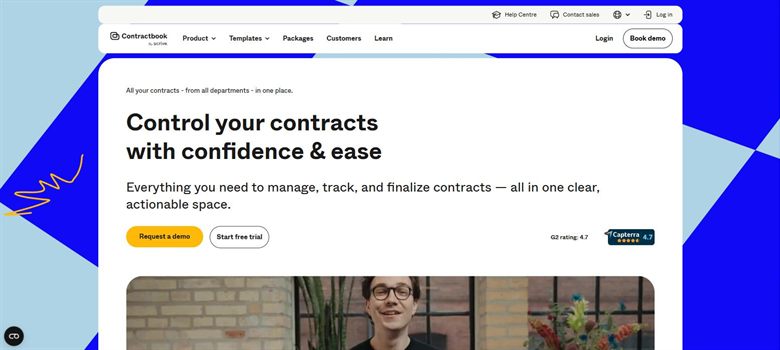
The verdict: For a function with a few dozen suppliers, the realistic loss is an auto-renewal nobody caught rather than a clause nobody negotiated. This handles that at a fraction of a percent of the platforms.
Pricing: No published rate card. Reported between approximately $39 and $599 a month depending on tier, which is the only genuinely small-team price in this category.
Standout features:
- Searchable repository of executed agreements
- Renewal and date reminders
- Data extraction from stored contracts
- Monthly pricing rather than annual contracts
Limitations: It stores and reminds rather than reviewing, so it will tell you a contract is renewing without any view on whether the terms were good. No published rate card despite being the small-team option, and no sourcing or supplier functionality at all.
How we chose
- Whether it is built for reviewing incoming paper rather than issuing your own.
- Obligation tracking after signature, since procurement value is realised over the contract term rather than at signature.
- Renewal and uplift alerting, which is where the avoidable losses are.
- Whether it connects to supplier and spend data, or treats a contract as a standalone document.
- Published price, which in this category is mostly absent and is worth noting for a function whose job is price discovery.
- We did not score on supplier risk questionnaires, onboarding or spend analytics. Those are procurement software features and a separate category, and including them would flatter the platforms.
Frequently asked questions
What is the best contract tool for a procurement team in 2026?
Icertis if you run a real sourcing function at enterprise scale, though it publishes no price. Ironclad as the strongest mainstream platform, reported at a median near $40,000 a year. GenieAI for reviewing incoming supplier paper without waiting on legal, at a published free tier rising to $75 a month.
Why is most contract software wrong for procurement?
Because it is built for the sell side, where you write the agreement, own the template and set the defaults. Procurement receives the supplier's paper with less leverage, and the terms that hurt, auto-renewal, uncapped uplifts and weak service levels, bite over the term rather than at signature. Sell-side tools optimise for getting to signature, which is the wrong finish line.
How much do these cost?
GenieAI publishes a free tier rising to $75 a month and Contractbook is reported from around $39. Robin AI is reported from about $500 a month. Ironclad and Evisort are both reported from around $30,000 a year. Icertis and LegalOn publish nothing and no reliable figures could be sourced.
What should procurement actually negotiate?
Auto-renewal and its notice window, the price increase mechanism and any uncapped uplift, the service level and whether the remedy is worth claiming, and data terms if the supplier touches your data. The liability cap matters less than people assume, because most supplier disputes end in an unhappy renewal rather than in court.
Can procurement review contracts without legal?
For standard supplier agreements against positions legal has agreed, yes, and that is how most businesses operate. Escalate anything touching personal data, anything with uncapped financial exposure, and anything where the supplier has refused your position twice. A tool that flags those is doing the part that matters.
How do we stop auto-renewals going through?
It is a tracking problem, not a review one, and no review tool touches it. Ironclad, Icertis and Evisort extract and alert on renewal dates, and Contractbook does it at small-team prices. This is the most avoidable procurement loss there is and it costs more than bad clauses do.
Do we need buy-side positions written down?
Most businesses have sell-side positions and none for buying, which is why supplier terms drift between people. Writing down what you will accept on renewal notice, price increases and service levels is worth more than any tool here, and it is the prerequisite for the position-enforcing tools to do anything at all.