
7 Best Lexis+ AI Alternatives in 2026
Quick answer: The shortlist divides once rather than seven ways: does the tool license primary law, or not. Westlaw Precision and vLex Vincent do, and are genuine substitutes. Harvey, CoCounsel at its lower tiers, Spellbook and Luminance do not, which means they sit alongside a research subscription rather than replacing one. Paxton AI exists because Lexis+ AI at a reported $3,000 to $8,000 per user a year prices small firms out. If you are leaving over cost and the work turns on authority, the honest answer is that the corpus is what you are paying for and it is not available cheaply.
Comparison
| Tool | Score | Best for | Price | Key strength |
|---|---|---|---|---|
| Westlaw Precision | 9.3 | the direct substitute | No published price | KeyCite and headnote depth |
| vLex Vincent | 8.6 | work that crosses borders | No published price | Breadth of jurisdictions |
| CoCounsel | 8.0 | research alongside document work | Reported from ~$4,500 per user/yr | One tool for a mixed day |
| Harvey | 7.3 | firms buying across practice areas | Reported ~$50,000 to $290,000/yr | Breadth beyond research |
| Paxton AI | 6.5 | small firms priced out | No published price | Lowest entry point in the category |
| Spellbook | 5.8 | lawyers whose work is contracts | Reported ~$99 to $199 per user/mo | A fraction of the price for the right job |
| Luminance | 5.4 | contract analysis at volume | List ~$41,340/yr for 1,000 documents | Publishes a price, unusually |
Fit by buyer
Scored 1 to 5 for each buyer, where 5 means the tool was built for them and 1 means it is the wrong tool. Scope is different: it is how much of the job the tool does, from a single step to a whole lifecycle, and a low score there means narrow rather than bad. These ratings are the same for a tool wherever it appears; the score shown beside each entry is for this guide specifically. A tool can lead one column and come last in another, and the right answer still changes with who is asking. How we score.
| Tool | Lawyer in Word | In-house legal | Commercial team | Enterprise | Scope | Price |
|---|---|---|---|---|---|---|
| Westlaw Precision | 4 | 4 | 1 | 4 | 4 | None |
| vLex Vincent | 4 | 3 | 1 | 3 | 4 | None |
| CoCounsel | 4 | 4 | 1 | 3 | 4 | Reported |
| Harvey | 4 | 3 | 1 | 4 | 4 | Reported |
| Paxton AI | 3 | 3 | 1 | 2 | 3 | None |
| Spellbook | 5 | 4 | 2 | 2 | 2 | Reported |
| Luminance | 3 | 4 | 1 | 4 | 4 | Published |
Which one, for your situation
| If this is your situation | Start with |
|---|---|
| You want the other half of the research duopoly | Westlaw Precision |
| The work crosses jurisdictions | vLex Vincent |
| Research sits alongside document and drafting work | CoCounsel |
| A firm buying breadth across practice areas | Harvey |
| A small firm priced out of the incumbents | Paxton AI |
| What you actually do is contracts, not research | Spellbook |
| The volume is contract analysis across an estate | Luminance |
The 7 best Lexis+ AI alternatives
1. Westlaw Precision: Best for the direct substitute
9.3 out of 10 how this is calculated
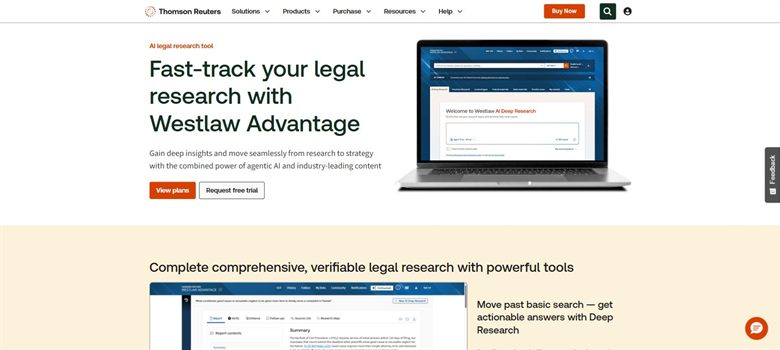
The verdict: The only genuine like-for-like: licensed primary law, citation treatment, AI grounded in the corpus. The differences are conventions rather than capability, and the switching cost is retraining rather than features.
Pricing: No published price and no reliable reported figure we could source. Sold per user per year alongside a Westlaw subscription, and quoted on firm size and practice areas. We would rather say that than print a number we cannot stand behind.
Standout features:
- Licensed case law with editorial headnotes
- KeyCite treatment flags
- AI answers grounded in the licensed corpus
- Practice-area specific research tools
Limitations: Publishes nothing and no reliable figure could be sourced, so a buyer leaving Lexis over cost cannot even compare. It assumes an underlying Westlaw subscription, so switching means paying for two databases during transition.
2. vLex Vincent: Best for work that crosses borders
8.6 out of 10 how this is calculated
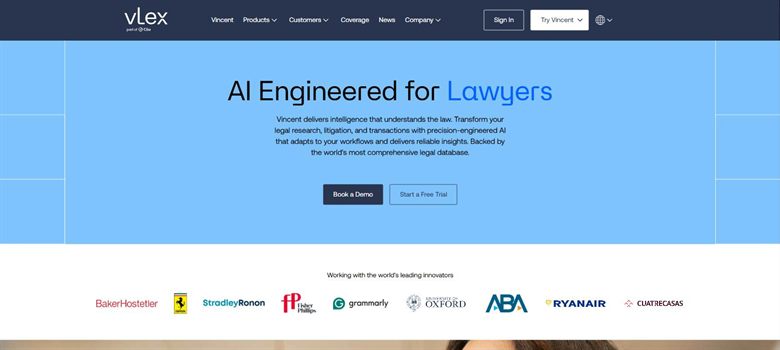
The verdict: The specific answer when Lexis's international modules turned out thinner than expected. Coverage across many jurisdictions is genuinely broader, and for cross-border questions breadth of corpus beats quality of model.
Pricing: No published price and no reliable reported figure we could source. Sold per user with pricing that varies by jurisdiction coverage.
Standout features:
- Coverage across many jurisdictions
- Cross-border comparison of legal concepts
- Answers linked to source documents
- Now part of Clio following acquisition
Limitations: Depth in any single jurisdiction sits below Lexis in its home market, so it complements rather than replaces for US-only work. No published pricing, and the Clio acquisition leaves how it will be sold less settled.
3. CoCounsel: Best for research alongside document work
8.0 out of 10 how this is calculated
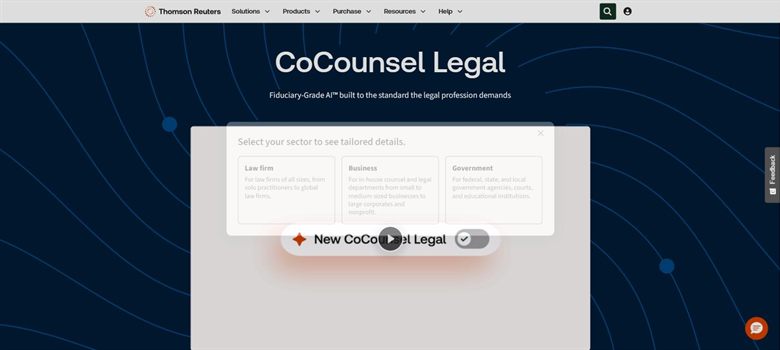
The verdict: Useful where legal work is not neatly divided. It handles review, summarisation and drafting alongside research, which suits a lawyer whose day mixes both rather than one doing pure authority work.
Pricing: Sales-led and tiered by database access. Third-party reports put entry around $4,500 per user a year, rising substantially with Practical Law or Westlaw access. These figures are directional, so get a written quote.
Standout features:
- Research, review, summarisation and drafting in one product
- Access to Westlaw and Practical Law at higher tiers
- Document comparison and deposition preparation
- Buyable per seat
Limitations: The reported entry figure is for the tier without database access, and adding Westlaw raises it substantially. So the version that competes with Lexis+ AI on corpus is not the version at the headline price.
4. Harvey: Best for firms buying across practice areas
7.3 out of 10 how this is calculated
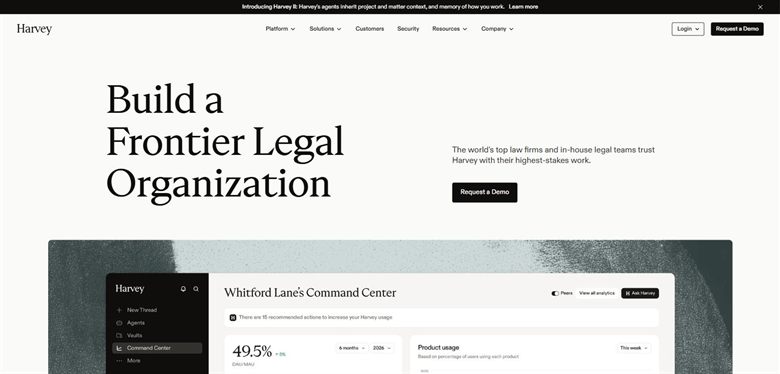
The verdict: A different purchase entirely: firm infrastructure rather than a research subscription. Worth considering only if breadth across practice groups is the goal, and not as a way to spend less on research.
Pricing: No public list price. Reported annual contracts run approximately $50,000 to $290,000 depending on firm size and practice-area coverage.
Standout features:
- Coverage across litigation, corporate and regulatory work
- Research, drafting and analysis in one system
- Firm knowledge management across matters
- Custom workflows per practice group
Limitations: It licenses no primary law, so it does not replace Lexis+ AI at all: authority work still routes to a corpus you keep paying for. Reported from around $50,000 a year with no public trial and a deployment measured in months.
5. Paxton AI: Best for small firms priced out
6.5 out of 10 how this is calculated
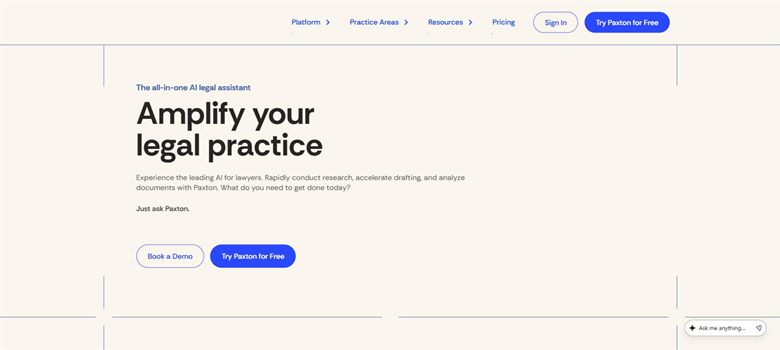
The verdict: Exists precisely because Lexis+ AI at a reported $3,000 to $8,000 per user a year is beyond a small firm. Whether the corpus is deep enough depends entirely on your practice area, and testing that is the whole evaluation.
Pricing: No published list price and no reliable reported figure we could source. Positioned well below the incumbents, and sold per user.
Standout features:
- Priced for solo and small firms
- Citation-linked answers
- Document analysis alongside research
- US case law focus
Limitations: It does not license the editorial layers that make Shepard's valuable, so citation treatment is materially weaker, and treatment is the thing most worth having. Coverage is narrower and it publishes no price despite cost being its argument.
6. Spellbook: Best for lawyers whose work is contracts
5.8 out of 10 how this is calculated
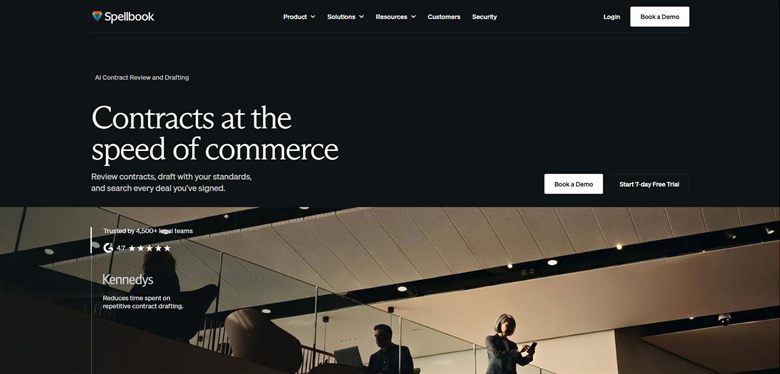
The verdict: Listed because a share of Lexis+ AI evaluations are really about transactional work rather than authority. If your day is drafting and reviewing contracts, this does that in Word for far less.
Pricing: No published list price. Reported at approximately $99 to $199 per user a month, rising to around $350 per user on enterprise plans with a ten-seat minimum. A seven-day trial is offered.
Standout features:
- Drafting, review and redlining inside Microsoft Word
- Suggestions benchmarked against market standard
- Same-day setup with no implementation
- Seven-day trial
Limitations: It does no legal research and licenses no primary law, so it is not a substitute for anything Lexis+ AI does. For litigation or anything turning on authority it is not a candidate.
7. Luminance: Best for contract analysis at volume
5.4 out of 10 how this is calculated
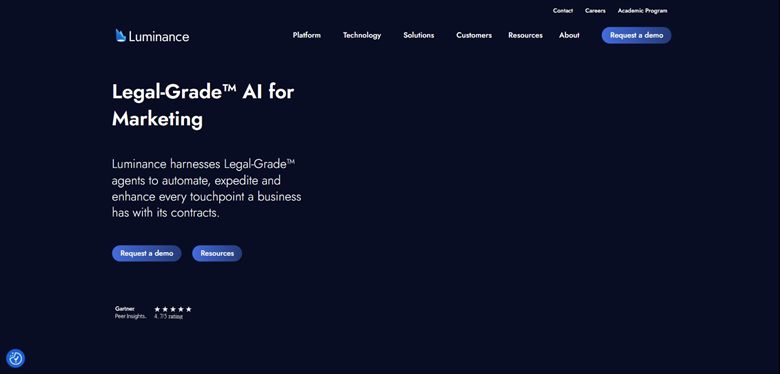
The verdict: On this page as the only vendor near it that will state a figure. Relevant where the work is document analysis across a set rather than research, and unlimited users suits a team that outgrew per-seat pricing.
Pricing: Published list price of approximately $41,340 a year for 1,000 documents with unlimited users. Enterprise deployments are reported from around $25,000 a year depending on volume and modules.
Standout features:
- Analysis across a whole document set
- Anomaly detection against learned standards
- Unlimited users on the published tier
- Coverage across many languages and jurisdictions
Limitations: No legal research and no licensed primary law, so it does not compete on the job Lexis+ AI does. Priced by document volume, which penalises a firm handling a few very large matters.
How we chose
- Whether it licenses primary law, which is the division that matters and the one marketing blurs.
- Citation treatment, since a research answer you cannot verify is not a research answer.
- Whether it replaces a research subscription or sits on top of one.
- Jurisdiction coverage, where all the US incumbents are thinner than they suggest.
- Published price, which none of these offers.
- We did not score on which foundation model sits underneath. What a tool is permitted to read decides research quality far more than what it is built on.
Frequently asked questions
What is the best alternative to Lexis+ AI in 2026?
Westlaw Precision is the only genuine like-for-like, since it licenses primary law and carries its own citation treatment. vLex Vincent if the work crosses jurisdictions. CoCounsel if research sits alongside document work, though the version that matches on corpus is not the one at the headline price.
Which alternatives actually license primary law?
Westlaw Precision and vLex Vincent do, and CoCounsel does at higher tiers through Westlaw access. Harvey, Spellbook and Luminance do not, and Paxton does not license the editorial layers that make citation treatment valuable. That single division decides the shortlist.
Is there a cheaper alternative to Lexis+ AI?
Not for the same job. Paxton is positioned below the incumbents but publishes no figure and has weaker citation treatment. Spellbook is far cheaper and does no research. The corpus is what costs money, and nothing licensing primary law is meaningfully cheaper than the reported $3,000 to $8,000 per user.
Does any of these replace a research subscription?
Only Westlaw Precision and vLex Vincent, because they carry their own corpus. Everything else sits on top of a subscription you keep paying for, which means the cost is additive. Modelling it as a substitution is the most common way these business cases go wrong.
Is switching from Lexis to Westlaw worth it?
Rarely on the AI layer alone. The switching cost is retraining and habit rather than features, since associates research the way they were taught, and you generally pay for both databases during transition. The AI capability is a good reason to add, not usually a good reason to move.
What about international coverage?
All the US incumbents are thinner outside the US and UK than the marketing suggests, Lexis included. vLex Vincent covers more jurisdictions and is the honest answer for cross-border work, at the cost of less depth in any single one.
Does anything here publish a price?
Only Luminance, at roughly $41,340 a year for 1,000 documents, and it does not do research. Harvey, CoCounsel and Spellbook have reported figures. Westlaw Precision, vLex Vincent and Paxton AI publish nothing and no reliable figures exist, so all three sit in our price index among the omissions.