
7 Best AI Contract Generator Tools in 2026
Quick answer: Generation and drafting are sold as the same thing and are not. Generation means producing a contract from nothing, usually by someone who is not a lawyer. GenieAI has a permanent free tier, so the premise can be tested at no cost before anything is committed. PandaDoc publishes $19 per user a month and is the cheapest credible option at volume. Juro is the one to look at when the generated contract has to flow into approvals and signature. If a lawyer is going to edit the output in Word, Spellbook is the better tool and this is the wrong list.
Comparison
| Tool | Score | Best for | Price | Key strength |
|---|---|---|---|---|
| GenieAI | 9.3 | generating agreements inside positions you have set | Free plan, then $75/mo; Enterprise from $600/mo | Generates from a brief, not a template you must pick |
| PandaDoc | 8.6 | sales contracts at volume | $19 per user/mo | Cheapest published per-seat price |
| Juro | 8.0 | generation that has to reach a signature | Reported ~$15,000 to $130,000/yr | Creation through to signature in one place |
| Spellbook | 7.2 | lawyers who draft inside Word | Reported ~$99 to $199 per user/mo | Generates where the editing happens |
| Contractbook | 6.6 | small teams priced out of the platforms | Reported ~$39 to $599/mo | Only small-team price here |
| Robin AI | 5.8 | volume generation against a playbook | From ~$500/mo | Applies your positions consistently |
| Wordsmith | 5.2 | in-house teams fielding repeat requests | Reported ~$450 per user/mo | Answers the question behind the request |
Fit by buyer
Scored 1 to 5 for each buyer, where 5 means the tool was built for them and 1 means it is the wrong tool. Scope is different: it is how much of the job the tool does, from a single step to a whole lifecycle, and a low score there means narrow rather than bad. These ratings are the same for a tool wherever it appears; the score shown beside each entry is for this guide specifically. A tool can lead one column and come last in another, and the right answer still changes with who is asking. How we score.
| Tool | Lawyer in Word | In-house legal | Commercial team | Enterprise | Scope | Price |
|---|---|---|---|---|---|---|
| GenieAI | 3 | 5 | 5 | 3 | 2 | Published |
| PandaDoc | 1 | 2 | 4 | 2 | 2 | Published |
| Juro | 2 | 4 | 4 | 4 | 4 | Reported |
| Spellbook | 5 | 4 | 2 | 2 | 2 | Reported |
| Contractbook | 1 | 3 | 4 | 2 | 3 | Reported |
| Robin AI | 3 | 3 | 4 | 2 | 2 | Reported |
| Wordsmith | 4 | 4 | 2 | 2 | 2 | Reported |
Which one, for your situation
| If this is your situation | Start with |
|---|---|
| You want to test the idea before spending anything | GenieAI |
| You are generating sales contracts at volume on a published price | PandaDoc |
| Generation has to feed approvals and signature | Juro |
| A lawyer will edit the draft in Microsoft Word | Spellbook |
| You are a small team and the platforms are out of budget | Contractbook |
| You are generating high volumes against your own playbook | Robin AI |
| You are an in-house team answering the same questions repeatedly | Wordsmith |
The 7 best AI contract generator tools
1. GenieAI: Best for generating agreements inside positions you have set
9.3 out of 10 how this is calculated
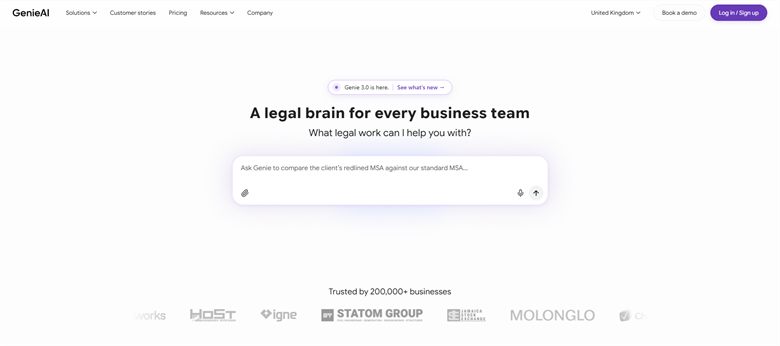
The verdict: The free tier is the argument. Contract generation is a category where the output quality is impossible to judge from a demo, and this is the only tool here that lets you judge it on your own documents before paying.
Pricing: Permanent free plan with no time limit. Pro $75 a month for one user, Business $320 a month for five, Enterprise from $600 a month with SSO, API access and an SLA.
Standout features:
- Generation from a prompt or a maintained template library
- Risk rated red, amber or green per clause
- Microsoft Word add-in that preserves native track changes
- Drafting, review and negotiation in one workspace
- Free tier with no time limit
Limitations: There is no procurement routing and no obligation tracking, so it does not replace a contract management platform, and at $320 a month for five users it is more expensive per seat than PandaDoc at volume. Generation leans on the template library and the standards your organisation has set, so an agreement type nobody has set positions for gets less help than a common one.
2. PandaDoc: Best for sales contracts at volume
8.6 out of 10 how this is calculated
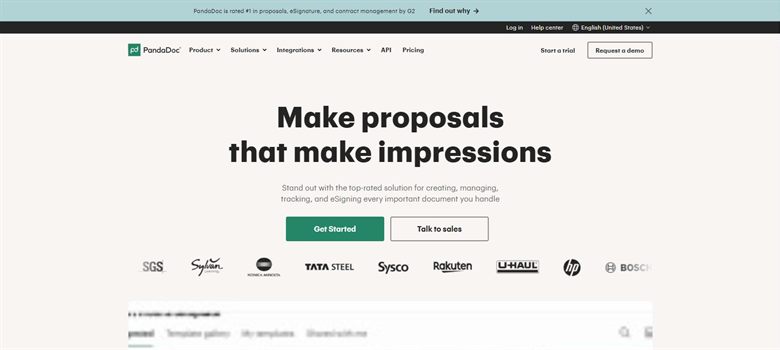
The verdict: Built for the sales team rather than the legal team, and priced accordingly. If the contracts being generated are order forms and standard agreements going out at volume, nothing here is cheaper per seat.
Pricing: Published at $19 per user a month, one of the few vendors in this market to state a list price at all.
Standout features:
- Template-driven document and contract generation
- Native electronic signature
- CRM integration with Salesforce and HubSpot
- Analytics on what recipients actually opened
Limitations: It is a document tool that handles contracts rather than a contract tool, so clause-level legal intelligence is thin and there is no risk assessment of what has been generated. Legal teams generally find it too shallow for anything negotiated, and it assumes your contracts are standard enough not to need argument.
3. Juro: Best for generation that has to reach a signature
8.0 out of 10 how this is calculated
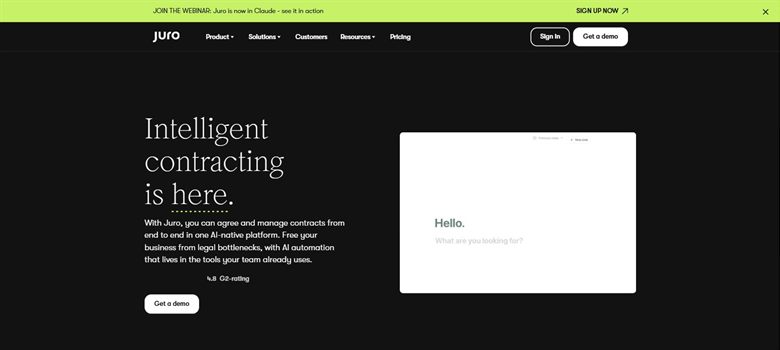
The verdict: The strongest option when generating the contract is only the first step and approvals, negotiation and signature all have to happen somewhere. Non-legal staff can operate it, which is the part most platforms get wrong.
Pricing: Sales-led with no public list price. Reported annual contracts run approximately $15,000 to $130,000, with marketplace medians around $31,000 to $34,500, priced on contract volume rather than per seat.
Standout features:
- Browser-based creation from templates with guided fields
- Approval workflows usable by sales and operations
- Native electronic signature
- Searchable repository with reporting
Limitations: Priced on contract volume with no published figure, so the cost of growth cannot be modelled before a sales conversation. At the reported entry point of around $15,000 a year it is an order of magnitude above the per-seat tools here, which makes it hard to justify if generation is genuinely all you need.
4. Spellbook: Best for lawyers who draft inside Word
7.2 out of 10 how this is calculated
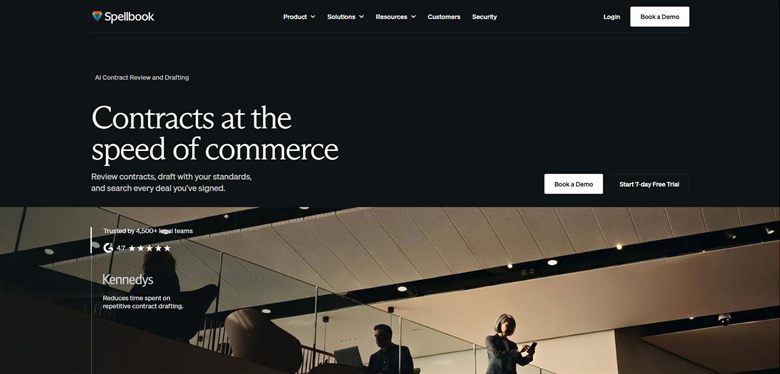
The verdict: Generates a draft in the place a lawyer will edit it, which removes the export step every browser-based tool imposes. That is a smaller advantage than it sounds for non-lawyers and a large one for lawyers.
Pricing: No published list price. Reported at approximately $99 to $199 per user a month, rising to around $350 per user on enterprise plans with a ten-seat minimum. A seven-day trial is offered.
Standout features:
- Clause and full-agreement generation inside Microsoft Word
- Suggestions benchmarked against market standard
- Redlining and review alongside generation
- Seven-day trial
Limitations: It assumes a qualified reader who can judge whether a suggestion is right, which makes it a poor fit for a commercial team generating contracts without legal support. There is no repository, no approval workflow and no signature, so it produces documents and stops.
5. Contractbook: Best for small teams priced out of the platforms
6.6 out of 10 how this is calculated

The verdict: The honest option for a team generating a few hundred contracts a year rather than a few thousand, where the platforms above are solving a problem you do not have yet.
Pricing: No published rate card. Reported between approximately $39 and $599 a month depending on tier, which is the only genuinely small-team price in this category.
Standout features:
- Template-driven contract creation
- Searchable repository
- Data extraction and renewal reminders
- Monthly pricing rather than annual contracts
Limitations: Generation is template substitution rather than anything model-driven, so a contract you have no template for is a contract you are writing yourself. The tier spread from $39 to $599 is wide and undisclosed, which means growth involves a conversation you cannot plan for.
6. Robin AI: Best for volume generation against a playbook
5.8 out of 10 how this is calculated
The verdict: Aimed at teams generating the same agreement repeatedly and wanting each one to take the same positions. The playbook is the product, and the generation is downstream of it.
Pricing: Subscription tiered by features and volume, reported from around $500 a month for small teams, with enterprise pricing set on contract volume.
Standout features:
- Generation and redlining against a defined playbook
- Word and browser workflows
- Consistency checking across a contract set
- Human legal support available on higher tiers
Limitations: The playbook has to be built and maintained before the tool earns anything, which is real work and is where most deployments stall. At around $500 a month it sits awkwardly between the per-seat tools and the platforms, and it is thin on repository and reporting compared with either.
7. Wordsmith: Best for in-house teams fielding repeat requests
5.2 out of 10 how this is calculated
The verdict: Sits closer to a legal assistant than a generator. Useful where the business keeps asking for the same document and the answer should arrive without a lawyer writing it again.
Pricing: No published list price. Reported at approximately $450 per user a month, which is the top of the per-seat range in this category.
Standout features:
- Generation and review from in-house precedent
- Answers policy questions alongside producing documents
- Integrations with Slack and email
- Aimed at in-house rather than firm workflows
Limitations: At a reported $450 per user a month it is the most expensive per seat here, and it is priced for a legal team rather than for the commercial team that usually generates contracts. It is a young product with a shorter track record than anything else on this list.
How we chose
- Whether a non-lawyer can produce a usable first draft without training.
- Where the contract comes from: a maintained template library, your own precedents, or a model prompt.
- What happens after generation, since a contract nobody can sign is half a product.
- Published price, and whether generation is included or sits behind a higher tier.
- Whether the output arrives in Word, which is still where most negotiation happens.
- We did not score on template counts. Vendors count them inconsistently, and the number says nothing about whether the one you need is any good.
Frequently asked questions
What is the best AI contract generator in 2026?
GenieAI if you want to test output quality before paying, because the free tier has no time limit. PandaDoc at $19 per user a month if you are generating standard contracts at volume. Juro if the generated contract has to move through approvals and signature. The right answer turns on what happens after generation, not on the generation itself.
Is a contract generator the same as a contract drafting tool?
They overlap and are sold interchangeably, but the buyer differs. Generation produces a contract from nothing and is usually operated by someone without legal training. Drafting assists a lawyer already working on a document. Spellbook is a drafting tool that generates; PandaDoc is a generator that does not really draft.
How much does an AI contract generator cost?
PandaDoc publishes $19 per user a month and GenieAI publishes a free tier rising to $75. Spellbook is reported at $99 to $199 per user a month and Wordsmith at around $450. Juro is reported from about $15,000 a year, priced on contract volume rather than seats.
Can a non-lawyer safely use a contract generator?
For standard agreements against a maintained template, yes, and that is what most of these tools are built for. The risk sits in the cases the template did not anticipate, where the output reads confidently and is wrong. Tools that flag risk per clause rather than producing clean-looking text handle this better.
Do these tools produce contracts in Word?
Spellbook generates inside Word directly. Most of the others are browser-based and export to Word, which is usually adequate but does lose formatting on complex documents. If the counterparty expects to redline in Word, test the export before committing rather than after.
Is there a free AI contract generator?
GenieAI runs a permanent free plan with no time limit, which is unusual in this category. Spellbook offers a seven-day trial rather than a free tier. Free template libraries exist elsewhere, but they give you a starting document rather than anything that adapts to your facts.
What is the most common mistake buying one of these?
Buying for generation when the actual bottleneck is approval. Teams routinely find that producing the draft was never the slow part, and that the delay sat in getting it reviewed and signed. Time the current process end to end before choosing, because it changes which half of this list is relevant.