
7 Best AI Tools for Law Firms in 2026
Quick answer: Most lists titled best legal AI are not written for firms. They rank tools built for in-house and commercial teams, where the user is not a lawyer and the work is standard commercial paper, and a firm buying from one of those lists gets a product that assumes the opposite of its situation. This page only lists tools sold to practising lawyers. Harvey is the firm-wide platform, reported at $50,000 to $290,000 a year. CoCounsel is the same idea per seat, reported from $4,500 per user. Lexis+ AI is the answer whenever the work turns on authority, because it licenses primary law and almost nothing else here does.
Comparison
| Tool | Score | Best for | Price | Key strength |
|---|---|---|---|---|
| Harvey | 9.4 | large firms buying across practice areas | Reported ~$50,000 to $290,000/yr | Breadth across the whole firm |
| CoCounsel | 8.7 | a practice group buying without a partnership vote | Reported from ~$4,500 per user/yr | Per seat, not per firm |
| Lexis+ AI | 8.0 | work that turns on citable authority | Reported ~$3,000 to $8,000 per user/yr | Licensed primary law and Shepard's |
| Spellbook | 7.2 | transactional drafting inside Word | Reported ~$99 to $199 per user/mo | Meets lawyers in the file they are editing |
| LegalOn | 6.4 | reviewing incoming paper against set positions | No published price | Lawyer-authored position libraries |
| Clio Draft | 5.8 | litigation and court forms in a smaller firm | Add-on, reported from ~$40/mo plus $30 per user | Maintained court forms across fifty states |
| Paxton AI | 5.2 | solo and small firms priced out of the incumbents | No published price | Lowest entry point in the category |
Fit by buyer
Scored 1 to 5 for each buyer, where 5 means the tool was built for them and 1 means it is the wrong tool. Scope is different: it is how much of the job the tool does, from a single step to a whole lifecycle, and a low score there means narrow rather than bad. These ratings are the same for a tool wherever it appears; the score shown beside each entry is for this guide specifically. A tool can lead one column and come last in another, and the right answer still changes with who is asking. How we score.
| Tool | Lawyer in Word | In-house legal | Commercial team | Enterprise | Scope | Price |
|---|---|---|---|---|---|---|
| Harvey | 4 | 3 | 1 | 4 | 4 | Reported |
| CoCounsel | 4 | 4 | 1 | 3 | 4 | Reported |
| Lexis+ AI | 4 | 4 | 1 | 4 | 4 | Reported |
| Spellbook | 5 | 4 | 2 | 2 | 2 | Reported |
| LegalOn | 4 | 5 | 2 | 3 | 2 | None |
| Clio Draft | 4 | 2 | 1 | 2 | 2 | Reported |
| Paxton AI | 3 | 3 | 1 | 2 | 3 | None |
Which one, for your situation
| If this is your situation | Start with |
|---|---|
| A large firm buying across several practice areas at once | Harvey |
| One practice group wants research and document work without a partnership decision | CoCounsel |
| The work turns on citable authority | Lexis+ AI |
| Transactional drafting and redlining in Word | Spellbook |
| Reviewing incoming commercial paper against set positions | LegalOn |
| Litigation and court forms in a small or mid-sized firm | Clio Draft |
| A solo or small firm priced out of the incumbents | Paxton AI |
The 7 best AI tools for law firms
1. Harvey: Best for large firms buying across practice areas
9.4 out of 10 how this is calculated
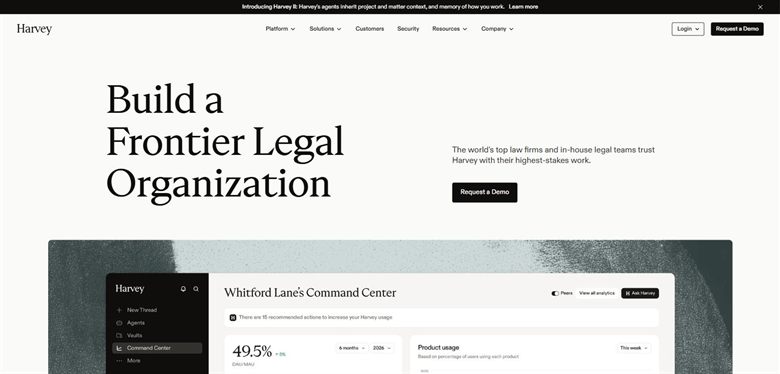
The verdict: The only product here sold as firm infrastructure rather than as software. Bought at partnership level, deployed per practice group, and the reason it commands the price is breadth rather than depth in any one task.
Pricing: No public list price. Reported annual contracts run approximately $50,000 to $290,000 depending on firm size and practice-area coverage.
Standout features:
- Coverage across litigation, corporate and regulatory work
- Research, drafting and analysis in one system
- Firm knowledge management across matters
- Custom workflows per practice group
Limitations: It does not license the Lexis or Westlaw corpora, so authority-heavy research still routes to an incumbent subscription and the cost is additive rather than substitutive. Deployment runs to months and consumes partner time before anything is delivered, and there is no public trial to test the premise first.
2. CoCounsel: Best for a practice group buying without a partnership vote
8.7 out of 10 how this is calculated
The verdict: The pragmatic answer for most firms. It covers research, review, summarisation and drafting, and being priced per seat means one group can adopt it without the whole firm agreeing first.
Pricing: Sales-led and tiered by database access. Third-party reports put entry around $4,500 per user a year, rising substantially with Practical Law or Westlaw access. These figures are directional, so get a written quote.
Standout features:
- Research, review, summarisation and drafting in one product
- Access to Westlaw and Practical Law at higher tiers
- Document comparison and deposition preparation
- Buyable per seat or firm-wide
Limitations: The price depends heavily on which database tier you take, so quotes vary widely and are hard to compare between firms. Buying it purely for research means paying for document features you may never use, and the entry figure rises sharply once Westlaw access is added.
3. Lexis+ AI: Best for work that turns on citable authority
8.0 out of 10 how this is calculated
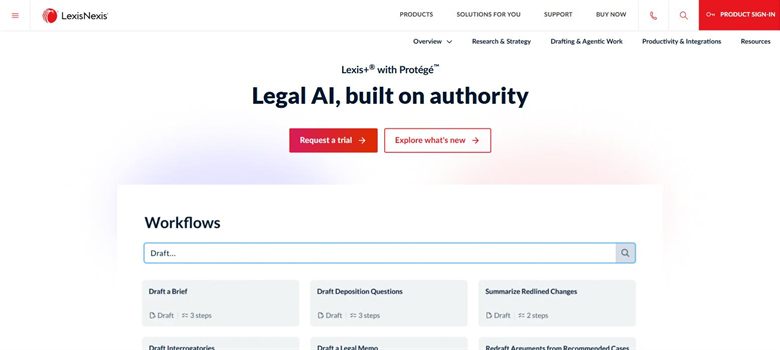
The verdict: The corpus is the product. Shepard's citation validation is the thing genuinely hard to replicate, and it is why firms tolerate both the price and the sales process.
Pricing: No public list price. Reported at approximately $3,000 to $8,000 per user a year for core services, with specialist modules charged separately. The database licence and the AI layer are usually priced as one.
Standout features:
- Licensed case law, statutes and secondary sources
- Shepard's citation validation
- Answers linked to the underlying authority
- Broad US coverage with international modules
Limitations: Priced per user per year on top of a database subscription, which puts it out of reach for small firms. Coverage outside the US and UK is patchier than the marketing suggests, and the interface carries decades of accumulated complexity that new associates have to be trained through.
4. Spellbook: Best for transactional drafting inside Word
7.2 out of 10 how this is calculated
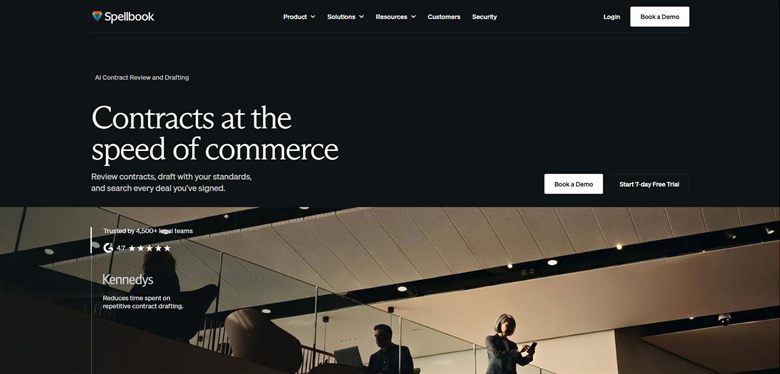
The verdict: The cheapest credible entry into legal AI for a transactional practice, and the only tool here a lawyer can be using the same afternoon. The seven-day trial means the evaluation costs nothing but time.
Pricing: No published list price. Reported at approximately $99 to $199 per user a month, rising to around $350 per user on enterprise plans with a ten-seat minimum. A seven-day trial is offered.
Standout features:
- Drafting, review and redlining inside Microsoft Word
- Suggestions benchmarked against market standard
- Clause generation alongside review
- Seven-day trial
Limitations: Contracts only, so it does nothing for litigation, research or anything outside transactional work. No repository, no matter management and no citation checking, and the ten-seat minimum on enterprise plans is awkward for the small firms its per-seat rate otherwise suits.
5. LegalOn: Best for reviewing incoming paper against set positions
6.4 out of 10 how this is calculated
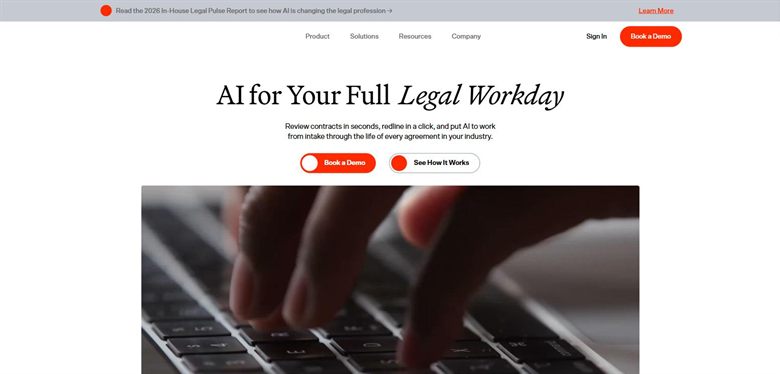
The verdict: Built by lawyers around what a reviewing lawyer actually decides, and the quality of the suggested positions shows it. The complete absence of a price is the reason it sits fifth rather than higher.
Pricing: No public list price, and we could not source a reliable reported figure. Sales-led and quoted on seat count and playbook scope.
Standout features:
- Review against standards with suggested revisions
- Pre-built position libraries by agreement type
- Word integration for redlining
- Reasoning attached to each suggestion
Limitations: No published price and no reported figure we could stand behind, so a firm cannot shortlist it without entering a sales process. Coverage is strongest on common commercial agreements and thinner on bespoke drafting, which is much of what a firm is instructed on.
6. Clio Draft: Best for litigation and court forms in a smaller firm
5.8 out of 10 how this is calculated
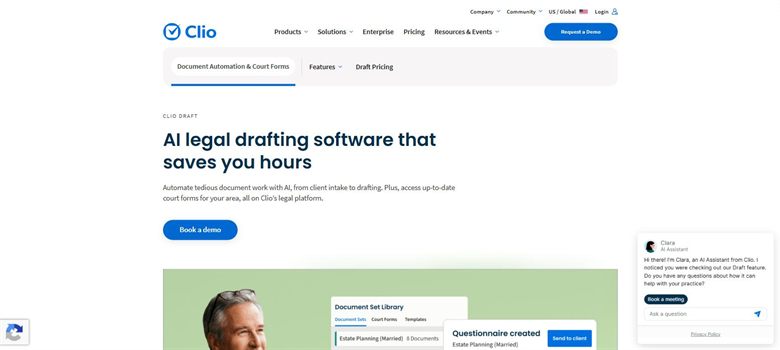
The verdict: The only entry here aimed squarely at the litigation practice rather than the transactional one. Filling a state form correctly from matter data you already hold is a narrow job the general tools do badly.
Pricing: Sold as a paid add-on to a Clio subscription rather than on its own, and quoted by sales. Reported configurations run from about $40 a month plus $30 per user for the court forms library, up to about $120 a month plus $30 per user for the full feature set. The Clio subscription underneath is a separate cost.
Standout features:
- Maintained court forms library across all fifty states
- Populates documents from existing Clio matter data
- Word-based document assembly
- Electronic filing in supported jurisdictions
Limitations: It assumes you already run Clio, so the real cost is two subscriptions and it makes little sense standalone. Local and county form coverage varies even though the state-level library is complete, so check the specific courts you file in before buying.
7. Paxton AI: Best for solo and small firms priced out of the incumbents
5.2 out of 10 how this is calculated
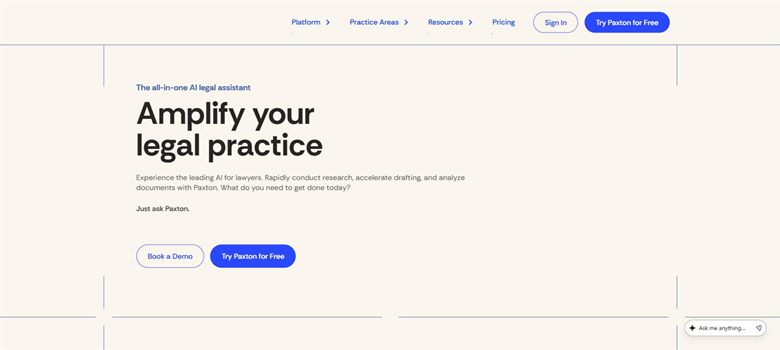
The verdict: Exists because Lexis, Westlaw and Harvey all price small firms out. Whether the corpus is deep enough depends entirely on your practice area, and that is the thing to test rather than assume.
Pricing: No published list price and no reliable reported figure we could source. Positioned well below the incumbents, and sold per user.
Standout features:
- Priced for solo and small firms
- Citation-linked answers
- Document analysis alongside research
- US case law focus
Limitations: It does not license the proprietary editorial layers that make Shepard's and KeyCite valuable, so citation treatment is materially weaker than the incumbents. Coverage is narrower, and it publishes no price of its own, which is a poor look for a product whose main argument is cost.
How we chose
- Whether the tool is sold to practising lawyers at all, which excludes most of the legal AI market.
- Whether it licenses primary law, since a research tool without a corpus is a chatbot with citations you have to check.
- Whether it works in Microsoft Word, where transactional drafting and every counterparty exchange happens.
- Whether a practice group can buy it, or whether it requires a partnership decision.
- Realism about billing: a tool that saves associate hours has a complicated relationship with an hourly model, and vendors rarely say so.
- We did not score tools built for non-lawyer business teams. Several are good products and several are cheaper than everything here, but they assume nobody qualified is reading the output, which is the wrong assumption for a firm. Those belong on our in-house and commercial guides.
Frequently asked questions
What is the best AI tool for a law firm in 2026?
Harvey if you are a large firm buying across practice areas, reported at $50,000 to $290,000 a year. CoCounsel if one practice group wants to adopt without a partnership decision, reported from $4,500 per user. Lexis+ AI whenever the work turns on authority, because it licenses primary law and most of this category does not.
Why are some well-known legal AI tools missing from this list?
Because a large part of the legal AI market is sold to in-house and commercial teams, not to firms. Those products assume the person using them is not a lawyer, and are built to flag risk in plain language and keep standard agreements moving without legal involvement. That is a real and useful job. It is not what a firm is buying, and ranking them here would mislead.
How much should a firm expect to pay for legal AI?
Spellbook is reported at $99 to $199 per user a month for transactional drafting, which is the cheapest credible entry. CoCounsel is reported from about $4,500 per user a year and Lexis+ AI from $3,000. Harvey is reported from $50,000 a year as a firm deployment. LegalOn and Paxton publish nothing and no reliable figure could be sourced.
Do any of these replace Westlaw or Lexis?
No. Harvey, CoCounsel at its lower tiers, Spellbook and LegalOn do not license the proprietary case law corpora, and none has an equivalent of Shepard's or KeyCite. Firms adopting them generally keep the incumbent subscription, so the cost is additive. Establish that early, because it changes the business case considerably.
How does legal AI interact with hourly billing?
Awkwardly, and vendors are quiet about it. A tool that cuts a six-hour review to two hours reduces billable time unless the firm moves that matter to a fixed fee or redeploys the capacity. Firms that adopt without deciding which of those applies tend to see the tool used inconsistently, because the incentive to use it varies by fee earner.
Can a small firm afford any of this?
Spellbook at a reported $99 per user a month and Clio Draft as an add-on from about $40 a month plus $30 per user are the realistic options, and Paxton exists specifically for firms priced out of the incumbents. Harvey and the research incumbents are not small-firm purchases and do not pretend to be.
What is the most common mistake firms make buying legal AI?
Buying a tool built for a different reader. The second is buying breadth before establishing which single task is actually slow. A firm that can name the task, whether that is first-pass review, court forms or authority checking, has a much easier shortlist than one buying legal AI in general.