
Best AI Tools for Shareholder Agreements in 2026
Quick answer: If you have been handed a shareholder agreement and need to know what you are signing, start with GenieAI. It explains what each clause actually does in plain English and flags where the terms drift from what is typical, which is the part you cannot get from reading the document alone, and it does that on a free plan before you pay anything. If a lawyer is drafting one from scratch in Word, Spellbook is the better tool at a reported $99 to $199 per user a month. If you need to know how a specific term compares to what the market accepts and you have the budget for it, that is what Harvey is built for. A shareholder agreement settles who can block a sale, what a departing founder keeps and what a minority holder can force, so knowing which of your clauses are unusual is worth more here than on almost any other document you will sign.
Comparison
| Tool | Score | Best for | Price | Key strength |
|---|---|---|---|---|
| GenieAI | 9.3 | a founder reading an investor's template | Free plan, then $75/mo; Enterprise from $600/mo | Explains what each mechanic does, free to try |
| Spellbook | 8.4 | a lawyer drafting or marking up in Word | Reported ~$99 to $199 per user/mo | Strongest drafting assistance inside Word |
| Harvey | 7.7 | asking how a term compares to market | Reported ~$50,000 to $290,000/yr | The closest thing to a view on market standard |
| Luminance | 7.0 | checking one clause across many agreements | List ~$41,340/yr for 1,000 documents | Reads across a portfolio rather than one document |
| HotDocs | 6.1 | producing these repeatedly to a house standard | No published price; listings disagree | Deterministic assembly, no generated text |
| Lexis+ AI | 5.3 | researching a specific mechanic properly | Reported ~$3,000 to $8,000 per user/yr | Answers grounded in citable sources |
Fit by buyer
Scored 1 to 5 for each buyer, where 5 means the tool was built for them and 1 means it is the wrong tool. Scope is different: it is how much of the job the tool does, from a single step to a whole lifecycle, and a low score there means narrow rather than bad. These ratings are the same for a tool wherever it appears; the score shown beside each entry is for this guide specifically. A tool can lead one column and come last in another, and the right answer still changes with who is asking. How we score.
| Tool | Lawyer in Word | In-house legal | Commercial team | Enterprise | Scope | Price |
|---|---|---|---|---|---|---|
| GenieAI | 3 | 5 | 5 | 3 | 2 | Published |
| Spellbook | 5 | 4 | 2 | 2 | 2 | Reported |
| Harvey | 4 | 3 | 1 | 4 | 4 | Reported |
| Luminance | 3 | 4 | 1 | 4 | 4 | Published |
| HotDocs | 4 | 3 | 2 | 5 | 4 | Reported |
| Lexis+ AI | 4 | 4 | 1 | 4 | 4 | Reported |
Which one, for your situation
| If this is your situation | Start with |
|---|---|
| You have been sent an investor's template and want to understand it | GenieAI |
| A lawyer is drafting or marking up in Word | Spellbook |
| You are checking one clause across many portfolio companies | Luminance |
| You need to know how a term compares to market | Harvey |
| You are producing these repeatedly to a house standard | HotDocs |
| You need to research a specific mechanic properly | Lexis+ AI |
The 6 best AI tools for shareholder agreements
1. GenieAI: Best for a founder reading an investor's template
9.3 out of 10 how this is calculated
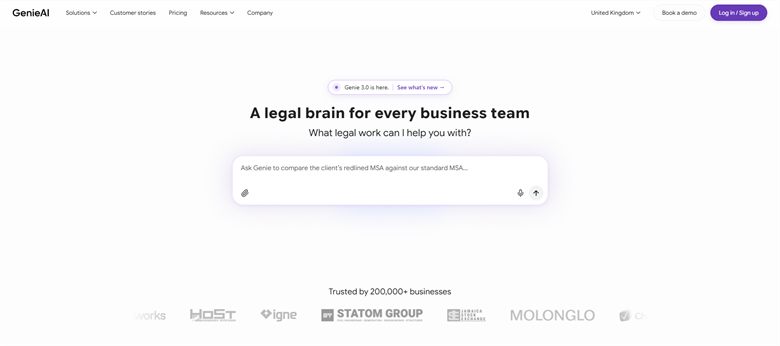
The verdict: The common situation here is a founder holding an investor's document and not being certain what half of it means. Plain-language explanation of drag-along, leaver and reserved-matters clauses is genuinely useful for arriving at a negotiation informed rather than nodding along.
Pricing: Permanent free plan with no time limit. Pro $75 a month for one user, Business $320 a month for five, Enterprise from $600 a month with SSO, API access and an SLA.
Standout features:
- Explains drag-along, tag-along and pre-emption in plain language
- Flags leaver provisions and what triggers good or bad leaver treatment
- Identifies reserved matters that hand an investor a veto
- Free tier, so reading one agreement costs nothing
- Microsoft Word add-in for working in the document itself
Limitations: It will tell you a reserved-matters threshold is unusual; it will not tell you whether to accept it, because that turns on your leverage and how much you want the round. It also holds nothing once the document leaves it: no repository, no signature and no reminder when a transfer restriction bites.
2. Spellbook: Best for a lawyer drafting or marking up in Word
8.4 out of 10 how this is calculated
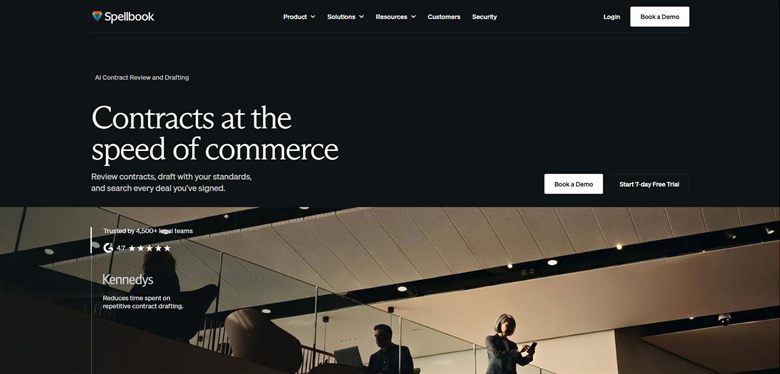
The verdict: If a qualified lawyer is doing the work, this is the most capable assistant in the document. It suggests clause language, spots internal inconsistency and drafts alternatives. It assumes the person driving already knows which position they are arguing for.
Pricing: No published list price. Reported at approximately $99 to $199 per user a month, rising to around $350 per user on enterprise plans with a ten-seat minimum. A seven-day trial is offered.
Standout features:
- Suggests clause language in Word as you draft
- Flags internal inconsistency across a long agreement
- Drafts alternative positions for a term under negotiation
- Preserves native track changes
- Handles the length these documents run to without losing coherence
Limitations: It is built for lawyers and reads that way. A founder without legal training will get suggestions they cannot evaluate, which is worse than no suggestion. It also publishes no rate card, so the reported figures are directional.
3. Harvey: Best for asking how a term compares to market
7.7 out of 10 how this is calculated
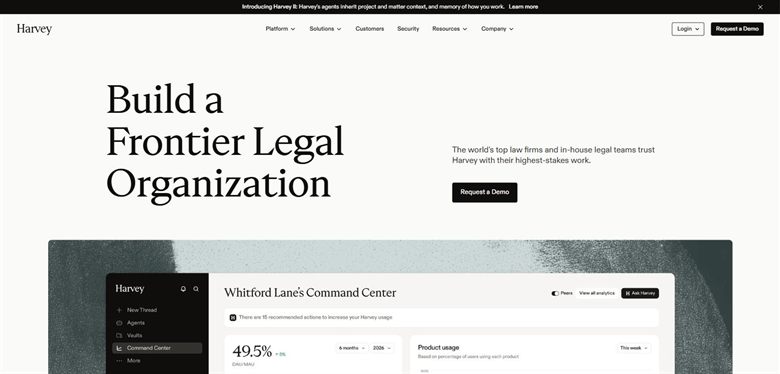
The verdict: The one tool here that will engage with whether a position is unusual rather than only what it says. That is the actual question in a shareholder agreement negotiation, which makes it relevant despite a price that rules it out for almost everyone reading this.
Pricing: No public list price. Reported annual contracts run approximately $50,000 to $290,000 depending on firm size and practice-area coverage.
Standout features:
- Will discuss whether a term is unusual rather than only what it means
- Handles the interaction between the agreement and articles
- Strong on long, structurally complex documents
- Built for firm-scale deployment
Limitations: The price is the limitation and it is decisive. Reported annual contracts of roughly $50,000 to $290,000 put it out of reach for a founder or a small in-house team regardless of how well it fits the question.
4. Luminance: Best for checking one clause across many agreements
7.0 out of 10 how this is calculated
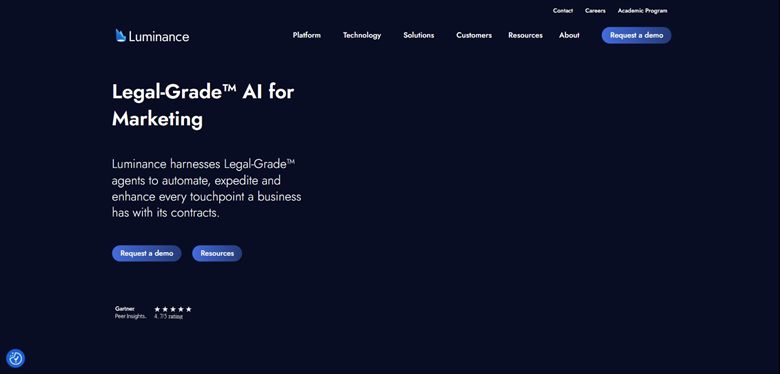
The verdict: Relevant in one specific situation: an investor or group holding stakes in many companies who needs to know which agreements carry a particular provision. For a single agreement it is heavily over-specified.
Pricing: Published list price of approximately $41,340 a year for 1,000 documents with unlimited users. Enterprise deployments are reported from around $25,000 a year depending on volume and modules.
Standout features:
- Reads a specific clause across a large set of agreements
- Identifies where terms depart from a house position
- Publishes a list price of about $41,340 a year for 1,000 documents
- Handles poorly scanned historic documents
Limitations: It answers questions across a set, not questions about one document. A founder with a single shareholder agreement is buying a portfolio tool to read one file, which is the wrong shape of purchase entirely.
5. HotDocs: Best for producing these repeatedly to a house standard
6.1 out of 10 how this is calculated
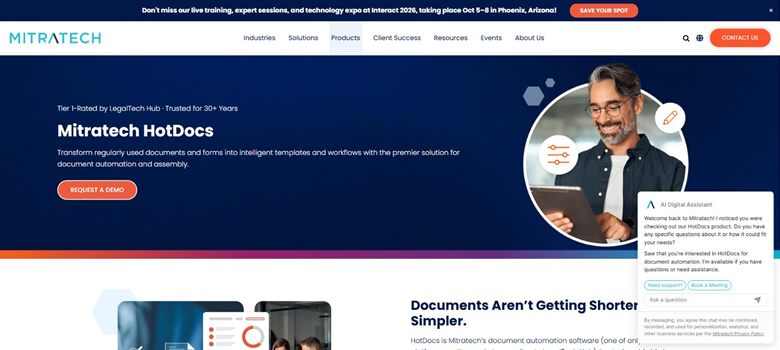
The verdict: The right answer for a firm or fund issuing shareholder agreements repeatedly from an approved house form. Output is assembled from language somebody has already approved, so it does not generate a clause nobody has read.
Pricing: No published price, and third-party listings disagree sharply enough that we will not print a single figure. Quotes range from about $25 per user a month on a five-seat minimum, through roughly $99 per user, to about $179 for a single cloud seat, falling towards $49 per user at very large volumes. Treat all of those as directional and get a written quote.
Standout features:
- Assembles from approved templates with no generated text
- Handles the conditional logic these documents need
- Same input produces the same output every time
- Long track record in document assembly
Limitations: It requires somebody to build and maintain the templates first, which is a real project measured in weeks. It also does nothing at all with a document you have been sent, because it produces rather than reads, and no two published quotes for it agree.
6. Lexis+ AI: Best for researching a specific mechanic properly
5.3 out of 10 how this is calculated
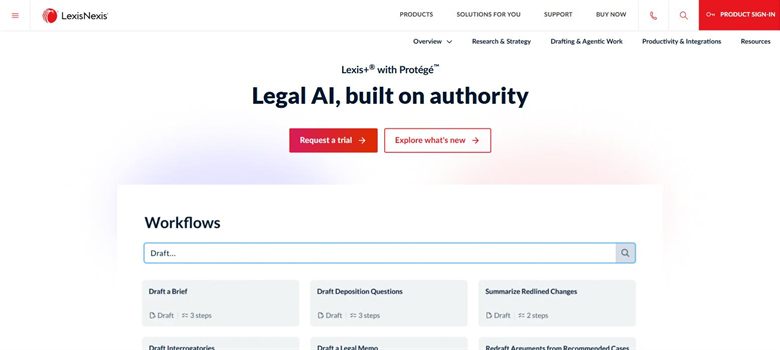
The verdict: Useful for the research question behind a drafting decision, such as how a particular drag-along threshold has been treated. Answers cite sources you can check, which matters when the answer is going to shape a term you sign once.
Pricing: No public list price. Reported at approximately $3,000 to $8,000 per user a year for core services, with specialist modules charged separately. The database licence and the AI layer are usually priced as one.
Standout features:
- Answers cite sources that can be verified
- Covers the case law behind specific mechanics
- Strong on the interaction with company law
- Usually bundled into an existing LexisNexis subscription
Limitations: It is a research tool and does not draft or review your document. It answers the question behind the clause, not the clause itself, so it sits alongside a drafting tool rather than replacing one. No list price is published, and the reported per-user figures cover the whole subscription rather than the AI layer alone.
How we chose
- Does it explain the specific mechanics that matter here: drag-along, tag-along, pre-emption, leaver provisions, reserved matters?
- Can it work on a document you have been sent, since most founders receive an investor's template rather than writing their own?
- Does it recognise that this document interacts with articles of association and a subscription agreement, and that reading it alone is incomplete?
- Is it honest about the limits, or does it present a negotiated position as a standard one?
- Price, weighed against the fact that this document is signed once and governs for years.
- We did not score on template libraries. A shareholder agreement template is worth very little, because the value is entirely in the terms somebody negotiated into it.
Frequently asked questions
What is the best AI tool for shareholder agreements in 2026?
GenieAI for a founder trying to understand an investor's template, on a free tier. Spellbook if a qualified lawyer is drafting in Word, at a reported $99 to $199 per user a month. But the substance of a shareholder agreement is negotiated positions rather than drafting, and no tool on this page has a view on which position you should take.
Can AI draft a shareholder agreement from scratch?
It can produce something with the right headings. Whether the drag-along threshold, the leaver definitions and the reserved matters reflect what you actually negotiated is a different question, and getting those wrong is expensive in a way that only surfaces years later when the parties disagree.
Which clauses matter most?
Drag-along and tag-along, which govern what happens on a sale. Leaver provisions, which govern what a departing founder keeps. Pre-emption, which governs dilution. And reserved matters, which is the list of decisions an investor can block. Those four determine most of what the document does in practice.
Should we just use a template?
A template gives you the structure, which is the easy part. The terms inside it were negotiated by somebody else in a different position with different leverage. Using an investor-friendly template because it was free is the most common expensive mistake here.
Is this a document where paying a lawyer is worth it?
More than almost any other. It is signed once, governs for years, and its provisions bite precisely when relationships have broken down and goodwill is unavailable. The tools on this page make you a better-informed client; they do not replace the specialist.
Do these tools understand the link to articles of association?
Partly, and it is a real gap. A shareholder agreement sits alongside the articles and often a subscription agreement, and a term can be undermined by what the articles say. Most tools read one document at a time and will not flag that inconsistency.
What is the cheapest way to understand one we have been sent?
GenieAI's free plan will explain the mechanics clause by clause with no time limit, which is enough to arrive at the conversation knowing what to ask. Use it to work out which three terms you care about, then spend legal budget on those rather than on the whole document.