
7 Best LinkSquares Alternatives in 2026
Quick answer: LinkSquares is strong at reporting on agreements you have already signed and deliberately light before signature, and that is what sends most people looking: they bought analytics and discovered they needed a platform. Ironclad is the usual destination, at a reported median near $40,000 a year. Evisort is the closer match if extraction across a messy estate was the actual value. Luminance is worth naming for one reason nobody else here offers, which is a published price of roughly $41,340 a year. LinkSquares itself publishes nothing and no reported figure could be sourced.
Comparison
| Tool | Score | Best for | Price | Key strength |
|---|---|---|---|---|
| Ironclad | 9.4 | a platform rather than a reporting layer | Reported ~$30,000 to $250,000/yr | Covers before and after signature |
| Evisort | 8.7 | extraction across a messy estate | Reported ~$30,000 to $150,000/yr | Reads what nobody has read |
| Luminance | 8.1 | analysis with a readable price | List ~$41,340/yr for 1,000 documents | The only published figure here |
| Icertis | 7.3 | obligations with owners and a status | No published price | Turns findings into assigned work |
| Juro | 6.7 | mid-sized teams that overbought | Reported ~$15,000 to $130,000/yr | Weeks to deploy, anyone can use it |
| Agiloft | 6.0 | industry-specific reporting fields | No published price | Model your own data |
| Contractbook | 5.2 | renewals as the actual requirement | Reported ~$39 to $599/mo | Only small-team price here |
Fit by buyer
Scored 1 to 5 for each buyer, where 5 means the tool was built for them and 1 means it is the wrong tool. Scope is different: it is how much of the job the tool does, from a single step to a whole lifecycle, and a low score there means narrow rather than bad. These ratings are the same for a tool wherever it appears; the score shown beside each entry is for this guide specifically. A tool can lead one column and come last in another, and the right answer still changes with who is asking. How we score.
| Tool | Lawyer in Word | In-house legal | Commercial team | Enterprise | Scope | Price |
|---|---|---|---|---|---|---|
| Ironclad | 2 | 4 | 2 | 5 | 5 | Reported |
| Evisort | 1 | 4 | 2 | 4 | 4 | Reported |
| Luminance | 3 | 4 | 1 | 4 | 4 | Published |
| Icertis | 1 | 3 | 1 | 5 | 5 | None |
| Juro | 2 | 4 | 4 | 4 | 4 | Reported |
| Agiloft | 1 | 3 | 1 | 4 | 5 | None |
| Contractbook | 1 | 3 | 4 | 2 | 3 | Reported |
Which one, for your situation
| If this is your situation | Start with |
|---|---|
| You needed a full platform rather than a reporting layer | Ironclad |
| Extraction across a messy legacy estate was the real value | Evisort |
| You want comparable analysis from a vendor that publishes a price | Luminance |
| Obligations need owners and a status, not just alerts | Icertis |
| You are mid-sized and this was heavier than needed | Juro |
| Your reporting fields are specific to your industry | Agiloft |
| Renewals were the whole reason you bought it | Contractbook |
The 7 best LinkSquares alternatives
1. Ironclad: Best for a platform rather than a reporting layer
9.4 out of 10 how this is calculated
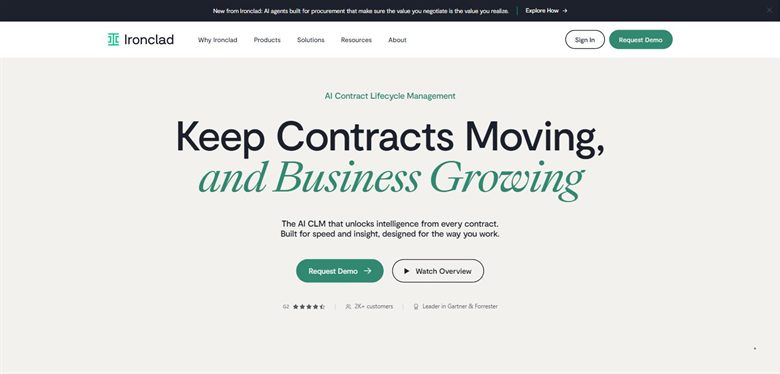
The verdict: The usual destination, because the common complaint about LinkSquares is not that its reporting is wrong but that nothing happens before a contract is signed. This covers both ends and has figures you can plan against.
Pricing: No public list price. Reported annual contracts run approximately $30,000 to $250,000, with a marketplace median near $40,000 across 363 recorded purchases.
Standout features:
- Conditional approval routing by value, risk and department
- Repository and reporting across executed agreements
- Obligation and renewal tracking
- Deep Salesforce and procurement integration
Limitations: Weaker at reading agreements signed before you bought it, because its tracking leans on metadata captured at creation. If the legacy estate was why you bought LinkSquares, this is a step backwards on exactly that.
2. Evisort: Best for extraction across a messy estate
8.7 out of 10 how this is calculated

The verdict: The closest like-for-like on the job LinkSquares is actually good at. Both answer questions about the signed estate; Evisort approaches it from extraction rather than from reporting, and handles unstructured sets better.
Pricing: No public list price. Reported annual contracts run approximately $30,000 to $150,000. Now part of Workday following acquisition, so renewals may route differently than they did.
Standout features:
- Extraction across large and unstructured document sets
- Obligation and renewal identification without manual entry
- Reporting on terms across the estate
- Workflow and approvals alongside extraction
Limitations: Also publishes nothing, so it does not solve the price transparency problem. Extraction degrades on older scanned documents and the cleanup lands on your team, and the Workday acquisition leaves pricing and roadmap less settled.
3. Luminance: Best for analysis with a readable price
8.1 out of 10 how this is calculated
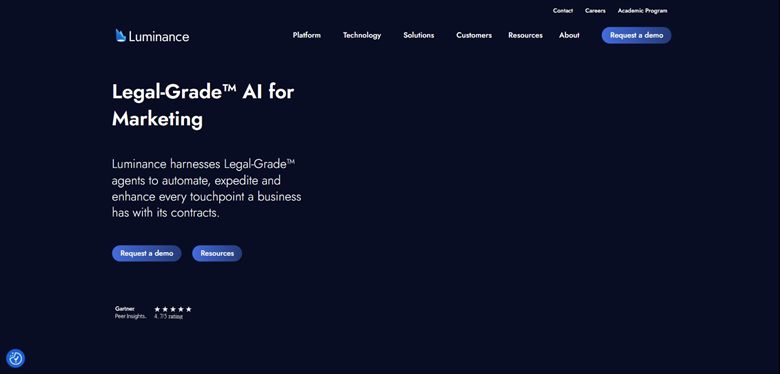
The verdict: Worth naming for the one thing nobody else on this page does: it will tell you a number. For a team that could not get a figure out of LinkSquares, that alone changes the evaluation.
Pricing: Published list price of approximately $41,340 a year for 1,000 documents with unlimited users. Enterprise deployments are reported from around $25,000 a year depending on volume and modules.
Standout features:
- Analysis across the whole contract estate
- Anomaly detection against learned standards
- Unlimited users on the published tier
- Coverage across many languages and jurisdictions
Limitations: Priced by document volume rather than seats, so a wide estate of short agreements costs the same as a narrow one of long ones. Alerting and ownership around an obligation are thinner than LinkSquares, and there is nothing before signature.
4. Icertis: Best for obligations with owners and a status
7.3 out of 10 how this is calculated

The verdict: The upgrade if the frustration was that LinkSquares told you things and nothing followed. Obligations here carry an owner and a status rather than arriving as an alert somebody may action.
Pricing: No published price and no reliable reported figure we could source. Enterprise sales-led, quoted on contract volume and module count. Widely understood to sit at the top of the market alongside Ironclad.
Standout features:
- Obligation extraction with owner assignment and status
- Compliance tracking against regulatory and internal policy
- Procurement and sourcing workflow
- Multi-entity and multi-jurisdiction support
Limitations: Publishes nothing and no reliable figure could be sourced, so it repeats LinkSquares' worst commercial habit at a higher price point. It is an enterprise deployment measured in months with a dedicated internal owner.
5. Juro: Best for mid-sized teams that overbought
6.7 out of 10 how this is calculated
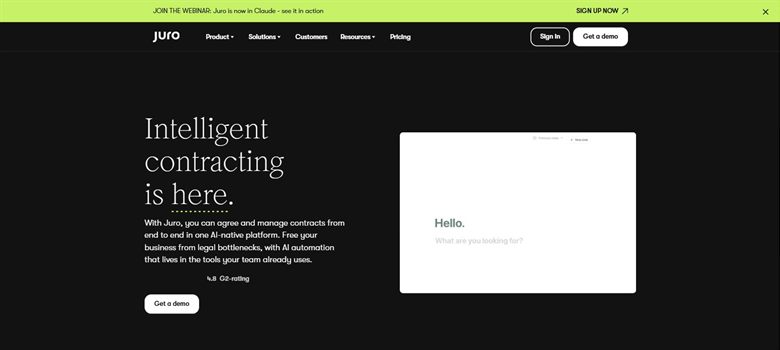
The verdict: For a business whose real need was a repository, renewal dates and approvals rather than analytics across thousands of agreements. It reaches that in weeks and non-legal staff run it unaided.
Pricing: Sales-led with no public list price. Reported annual contracts run approximately $15,000 to $130,000, with marketplace medians around $31,000 to $34,500, priced on contract volume rather than per seat.
Standout features:
- Searchable repository with renewal dates
- Approval routing when terms depart from standard
- Guided creation and native signature
- Usable by sales and operations without training
Limitations: It does not read a legacy estate meaningfully, so an inherited pile of unanalysed agreements stays that way. This is a change of scope rather than an upgrade, and a step down on the reporting LinkSquares does well.
6. Agiloft: Best for industry-specific reporting fields
6.0 out of 10 how this is calculated
The verdict: Where teams go when the fields they need reported are specific to their sector and no product ships them. You are buying the ability to define your own model, and paying separately to have it built.
Pricing: No published price and no reliable reported figure we could source. Quoted on users and modules, with configuration typically a separate cost.
Standout features:
- No-code configuration of the contract data model
- Conditional logic beyond fixed products
- Extensive permissions and audit trail
- Long track record in complex deployments
Limitations: Configuration is charged separately and is usually the larger half of the first year, which the licence quote does not show. Out-of-the-box extraction is weaker than LinkSquares, so you trade capability for flexibility.
7. Contractbook: Best for renewals as the actual requirement
5.2 out of 10 how this is calculated
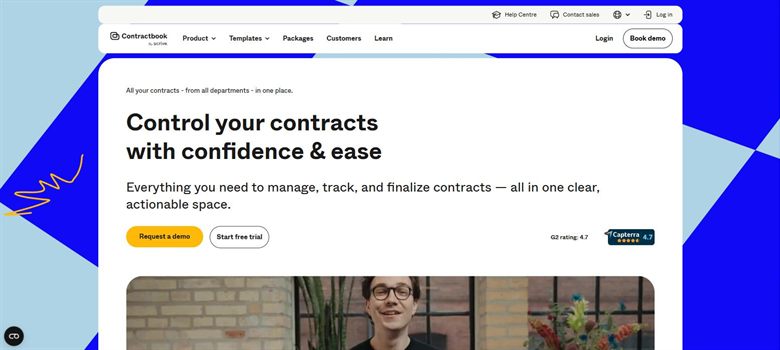
The verdict: On this page as a reality check. A number of LinkSquares evaluations begin because a renewal went through unnoticed, and that is a much cheaper problem than analytics across an estate.
Pricing: No published rate card. Reported between approximately $39 and $599 a month depending on tier, which is the only genuinely small-team price in this category.
Standout features:
- Searchable repository of executed agreements
- Renewal and date reminders
- Data extraction from stored contracts
- Monthly pricing rather than annual contracts
Limitations: Extraction is shallow and reporting across a large estate is not something it does. If you genuinely need to answer questions across thousands of agreements, this is not a swap and Evisort is the real answer here.
How we chose
- Extraction quality on agreements already signed, which is what LinkSquares is bought for.
- What the tool does before signature, since that gap is the most common reason for leaving.
- Whether findings are routed to somebody with an owner and a date, or produced as a report.
- Whether a price can be established at all, which for LinkSquares it cannot.
- Language and jurisdiction coverage for estates that cross borders.
- We did not score on dashboard design or reporting templates. Every vendor in this category demos well on a curated set, and how it reads your worst documents is the thing that decides it.
Frequently asked questions
What is the best alternative to LinkSquares in 2026?
Ironclad if you needed a full platform rather than a reporting layer, reported at a median near $40,000 a year. Evisort if extraction across a messy legacy estate was the real value. Luminance if you want comparable analysis from a vendor that publishes roughly $41,340 a year.
Why do people look for LinkSquares alternatives?
Most commonly because they bought analytics and needed a platform: LinkSquares is deliberately light before signature, so approvals, template control and creation all sit outside it. Second, because it publishes no price and no reliable reported figure exists, which makes renewal negotiations one-sided.
Is there a cheaper alternative to LinkSquares?
Impossible to establish, because LinkSquares publishes nothing and we could source no reported figure. Luminance publishes roughly $41,340 a year and Contractbook is reported from around $39 a month, so both are knowable in a way LinkSquares is not, which is a different advantage from being cheaper.
Which alternative reads old contracts best?
Evisort, then Luminance. Ironclad is materially weaker because its tracking depends on metadata captured when a contract was created, which does not exist for an inherited estate. Test on your worst scanned documents rather than on a vendor's clean sample.
Do any of these do pre-signature workflow?
Ironclad, Icertis, Agiloft and Juro all do, and that is the main reason to move. Evisort has workflow but is lighter, and Luminance and Contractbook do very little. If the gap you felt was before signature, that split is the shortlist.
Does anything here publish a price?
Only Luminance. Ironclad, Evisort and Juro have reported figures we could source. Icertis and Agiloft publish nothing and no reliable figures exist, so both appear in our price index among the omissions, alongside LinkSquares itself.
Should we replace LinkSquares or add to it?
Adding is often more honest if the reporting genuinely works and the gap is before signature, since a lifecycle platform alongside it keeps the analytics you already trust. Replace it when you want one record of the whole lifecycle, because splitting that across two systems undermines the reporting that justified either purchase.