
7 Best Luminance Alternatives in 2026
Quick answer: The unusual thing about Luminance is that it publishes a price, roughly $41,340 a year for 1,000 documents with unlimited users, and charges by document volume rather than by seat. That model is excellent for a wide estate and poor for a team doing a small number of very large matters, which is the single most common reason people look elsewhere. Evisort is the closest on extraction, reported at $30,000 to $150,000 a year. If the real gap was workflow rather than analysis, Ironclad and Icertis are the answers, and both cost more.
Comparison
| Tool | Score | Best for | Price | Key strength |
|---|---|---|---|---|
| Evisort | 9.4 | the closest match on extraction | Reported ~$30,000 to $150,000/yr | Reads a legacy estate well |
| Ironclad | 8.8 | doing something about what the analysis found | Reported ~$30,000 to $250,000/yr | Workflow and approval routing |
| Icertis | 8.0 | procurement and compliance obligations | No published price | Obligation management at scale |
| LinkSquares | 7.3 | reporting rather than analysis | No published price | Post-signature analytics |
| Robin AI | 6.5 | applying positions as contracts arrive | From ~$500/mo | Playbook rather than retrospective analysis |
| Spellbook | 5.8 | per-document work done in Word | Reported ~$99 to $199 per user/mo | Two orders of magnitude cheaper per seat |
| Harvey | 5.3 | firms rather than estate owners | Reported ~$50,000 to $290,000/yr | Breadth across practice areas |
Fit by buyer
Scored 1 to 5 for each buyer, where 5 means the tool was built for them and 1 means it is the wrong tool. Scope is different: it is how much of the job the tool does, from a single step to a whole lifecycle, and a low score there means narrow rather than bad. These ratings are the same for a tool wherever it appears; the score shown beside each entry is for this guide specifically. A tool can lead one column and come last in another, and the right answer still changes with who is asking. How we score.
| Tool | Lawyer in Word | In-house legal | Commercial team | Enterprise | Scope | Price |
|---|---|---|---|---|---|---|
| Evisort | 1 | 4 | 2 | 4 | 4 | Reported |
| Ironclad | 2 | 4 | 2 | 5 | 5 | Reported |
| Icertis | 1 | 3 | 1 | 5 | 5 | None |
| LinkSquares | 1 | 4 | 2 | 4 | 4 | None |
| Robin AI | 3 | 3 | 4 | 2 | 2 | Reported |
| Spellbook | 5 | 4 | 2 | 2 | 2 | Reported |
| Harvey | 4 | 3 | 1 | 4 | 4 | Reported |
Which one, for your situation
| If this is your situation | Start with |
|---|---|
| You want the same extraction with per-contract rather than per-document pricing | Evisort |
| The gap was approval workflow, not analysis | Ironclad |
| Procurement and compliance obligations are the real load | Icertis |
| You mainly need reporting on what you already signed | LinkSquares |
| You want consistent positions applied as contracts come in | Robin AI |
| The work is per-document and done by lawyers in Word | Spellbook |
| You are a firm buying across practice areas, not an estate owner | Harvey |
The 7 best Luminance alternatives
1. Evisort: Best for the closest match on extraction
9.4 out of 10 how this is calculated

The verdict: The nearest thing to a like-for-like. Same core proposition, which is making sense of thousands of agreements nobody has read, with workflow and approvals attached rather than analysis alone.
Pricing: No public list price. Reported annual contracts run approximately $30,000 to $150,000. Now part of Workday following acquisition, so renewals may route differently than they did.
Standout features:
- Extraction across large and unstructured document sets
- Obligation and renewal identification
- Reporting on terms across the estate
- Workflow and approvals alongside extraction
Limitations: It publishes no price, so you lose the one thing Luminance does that almost nobody else does. Extraction degrades on older scanned documents, and the Workday acquisition leaves pricing and roadmap open in a way that matters on a multi-year commitment.
2. Ironclad: Best for doing something about what the analysis found
8.8 out of 10 how this is calculated
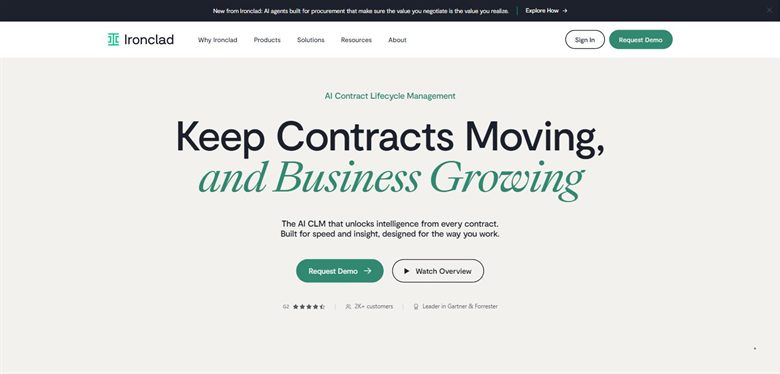
The verdict: The right move when the honest problem was that Luminance told you things and nothing happened next. Analysis without a workflow attached tends to produce reports rather than change.
Pricing: No public list price. Reported annual contracts run approximately $30,000 to $250,000, with a marketplace median near $40,000 across 363 recorded purchases.
Standout features:
- Conditional approval routing by value, risk and department
- Full repository with reporting
- Deep Salesforce and procurement integration
- Obligation and renewal tracking
Limitations: Its reading of contracts signed before you bought it is markedly weaker than Luminance's, since much of what it tracks depends on metadata captured at signature. Implementation runs to months, and the reported median near $40,000 is above Luminance's published figure.
3. Icertis: Best for procurement and compliance obligations
8.0 out of 10 how this is calculated

The verdict: The answer when the estate matters because of what it commits you to rather than what it says. Obligation and compliance tracking is a first-class part of this product rather than a report bolted on.
Pricing: No published price and no reliable reported figure we could source. Enterprise sales-led, quoted on contract volume and module count. Widely understood to sit at the top of the market alongside Ironclad.
Standout features:
- Obligation extraction with owner assignment and status
- Compliance tracking against regulatory and internal policy
- Deep ERP and procurement integration
- Multi-entity and multi-jurisdiction support
Limitations: No published price and nothing reliably reported, which is a poor trade against a vendor that states a list figure. It is an enterprise deployment measured in months with a dedicated internal owner, so it costs more than the licence in the first year.
4. LinkSquares: Best for reporting rather than analysis
7.3 out of 10 how this is calculated

The verdict: Comes at the same estate from the reporting end. Suits a team being asked what are we committed to, and suits a team doing per-document review considerably less.
Pricing: No published price and no reliable reported figure we could source. Sales-led and quoted on contract volume.
Standout features:
- Analytics across executed agreements
- Clause and term extraction with alerting
- Renewal and obligation notifications
- Drafting and workflow added later in its life
Limitations: Narrower language coverage than Luminance, which matters if the estate spans jurisdictions. It publishes no price and no reliable figure could be sourced, so it is hard to justify against a vendor whose number you can read.
5. Robin AI: Best for applying positions as contracts arrive
6.5 out of 10 how this is calculated

The verdict: A forward-looking answer to a backward-looking problem. If the estate is inconsistent, analysing it explains why and a playbook stops the next hundred agreements adding to it.
Pricing: Subscription tiered by features and volume, reported from around $500 a month for small teams, with enterprise pricing set on contract volume.
Standout features:
- Playbook of agreed positions with fallbacks
- Redlining against your standards rather than generic ones
- Word and browser workflows
- Human legal support on higher tiers
Limitations: It does not read a legacy estate, so it solves the next contract and none of the ten thousand behind it, which is usually why Luminance was bought. The playbook has to be built first, and that build is where most deployments stall.
6. Spellbook: Best for per-document work done in Word
5.8 out of 10 how this is calculated
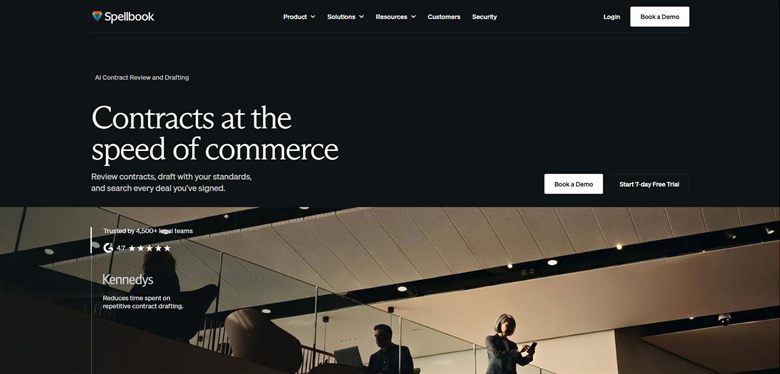
The verdict: Listed because a meaningful share of Luminance evaluations discover the work is per-document after all. If three lawyers are reviewing contracts in Word, this does that for a fraction of an estate-wide licence.
Pricing: No published list price. Reported at approximately $99 to $199 per user a month, rising to around $350 per user on enterprise plans with a ten-seat minimum. A seven-day trial is offered.
Standout features:
- Drafting, review and redlining inside Microsoft Word
- Suggestions benchmarked against market standard
- Same-day setup with no deployment project
- Seven-day trial
Limitations: It reads the document in front of you and nothing else, so it replaces none of the estate-wide analysis that is Luminance's entire proposition. No repository, no reporting and no obligation tracking.
7. Harvey: Best for firms rather than estate owners
5.3 out of 10 how this is calculated
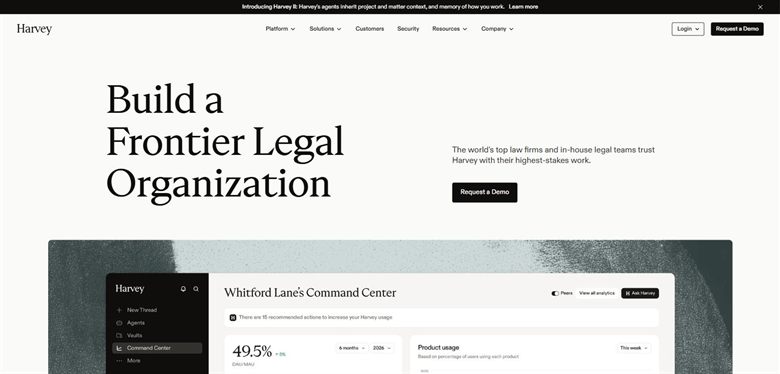
The verdict: A different buyer entirely. Relevant only if you are a firm whose contract analysis sits alongside litigation and regulatory work, rather than a business with an estate to understand.
Pricing: No public list price. Reported annual contracts run approximately $50,000 to $290,000 depending on firm size and practice-area coverage.
Standout features:
- Coverage across multiple practice areas
- Research, drafting and analysis in one system
- Firm knowledge management
- Custom workflows per practice group
Limitations: The reported floor of around $50,000 a year is above Luminance's published figure for a product that does less of this specific job. It publishes no price, and deployment runs to months against a tool you can scope from a public rate.
How we chose
- How the vendor charges, since document-volume pricing is the usual reason for leaving.
- Whether it reads contracts signed long before purchase, which is Luminance's main strength.
- Whether it does anything about what it finds, which Luminance largely does not.
- Language and jurisdiction coverage, where Luminance is genuinely strong.
- Whether a price exists at all, since Luminance is one of very few here that publishes one.
- We did not score on claimed model accuracy. No vendor publishes a methodology anyone can check, so the number is marketing rather than evidence.
Frequently asked questions
What is the best alternative to Luminance in 2026?
Evisort is the closest on extraction, reported at $30,000 to $150,000 a year. Ironclad if the real gap was doing something with what the analysis found. Icertis if the estate matters because of the obligations inside it rather than the language.
How much does Luminance cost?
It publishes a list price of approximately $41,340 a year for 1,000 documents with unlimited users, which makes it one of very few vendors at this tier to state a figure at all. Enterprise deployments are reported from around $25,000 a year depending on volume and modules.
Why do people look for Luminance alternatives?
Usually the charging model. Paying by document volume with unlimited users is excellent for a wide shallow estate and poor for a team handling a small number of very large matters, and teams often work that out a year in. Second, that analysis on its own produces reports rather than change.
Is there a cheaper alternative to Luminance?
Per seat, yes and by a wide margin: Spellbook is reported at $99 to $199 per user a month and Robin AI from around $500 a month. Neither does estate-wide analysis. Among tools that genuinely compete, Evisort's reported $30,000 floor is the only figure below Luminance's published rate.
Which alternatives read contracts signed years ago?
Evisort and Icertis both do it properly, and LinkSquares reports across executed agreements. Ironclad is weaker here than its reputation suggests, because much of what it tracks depends on metadata captured at signature rather than pulled from the document afterwards.
Does document-volume pricing ever work out cheaper?
For a wide estate with many users, frequently. Unlimited users at roughly $41,340 for 1,000 documents beats per-seat pricing once the team passes about twenty people. The model breaks down when documents are few and long, since a hundred-page master agreement counts the same as a one-page order form.
Do I need estate-wide analysis at all?
If nobody can say what your older agreements commit you to, yes, and that is a reading problem at a scale humans do not solve. If the pain is the contract on someone's screen this week, a per-seat review tool costs a fraction and does that job better.