
7 Best Spellbook Alternatives in 2026
Quick answer: People leave Spellbook for three reasons: the per-seat price at a reported $99 to $199 rising to about $350 on enterprise plans with a ten-seat minimum, the fact that it drafts and reviews but does not hold a repository or a workflow, and the assumption that a qualified reader is judging every suggestion. LegalOn is the closest like-for-like and arguably has the better position library. GenieAI is the answer if the price was the problem, with a permanent free tier. Robin AI is the answer if consistency across a team mattered more than individual speed. If none of those was your reason, Spellbook is a good product and switching is likely to disappoint.
Comparison
| Tool | Score | Best for | Price | Key strength |
|---|---|---|---|---|
| LegalOn | 9.1 | the closest like-for-like swap | No published price | Deeper position library |
| GenieAI | 8.6 | teams for whom the price was the problem | Free plan, then $75/mo; Enterprise from $600/mo | Permanent free tier |
| Robin AI | 7.9 | consistency across a team | From ~$500/mo | Playbook rather than per-document help |
| Wordsmith | 7.2 | in-house teams fielding repeat requests | Reported ~$450 per user/mo | Answers questions, not just documents |
| LegalFly | 6.5 | drafting with a platform underneath | Reported ~$75 per user/mo plus platform fee | More than a drafting add-in |
| Luminance | 6.1 | analysis across a whole estate | List ~$41,340/yr for 1,000 documents | Publishes a price at enterprise scale |
| Harvey | 5.3 | large firms buying across practice areas | Reported ~$50,000 to $290,000/yr | Breadth beyond contracts |
Fit by buyer
Scored 1 to 5 for each buyer, where 5 means the tool was built for them and 1 means it is the wrong tool. Scope is different: it is how much of the job the tool does, from a single step to a whole lifecycle, and a low score there means narrow rather than bad. These ratings are the same for a tool wherever it appears; the score shown beside each entry is for this guide specifically. A tool can lead one column and come last in another, and the right answer still changes with who is asking. How we score.
| Tool | Lawyer in Word | In-house legal | Commercial team | Enterprise | Scope | Price |
|---|---|---|---|---|---|---|
| LegalOn | 4 | 5 | 2 | 3 | 2 | None |
| GenieAI | 3 | 5 | 5 | 3 | 2 | Published |
| Robin AI | 3 | 3 | 4 | 2 | 2 | Reported |
| Wordsmith | 4 | 4 | 2 | 2 | 2 | Reported |
| LegalFly | 3 | 4 | 3 | 3 | 2 | Reported |
| Luminance | 3 | 4 | 1 | 4 | 4 | Published |
| Harvey | 4 | 3 | 1 | 4 | 4 | Reported |
Which one, for your situation
| If this is your situation | Start with |
|---|---|
| You want the same job done with a deeper position library | LegalOn |
| The per-seat price was the problem | GenieAI |
| You need everyone to take the same positions, not just draft faster | Robin AI |
| Your in-house team answers the same questions repeatedly | Wordsmith |
| You want drafting plus a platform underneath it | LegalFly |
| You are analysing a large estate, not just the document in front of you | Luminance |
| You are a large firm buying across practice areas | Harvey |
The 7 best Spellbook alternatives
1. LegalOn: Best for the closest like-for-like swap
9.1 out of 10 how this is calculated
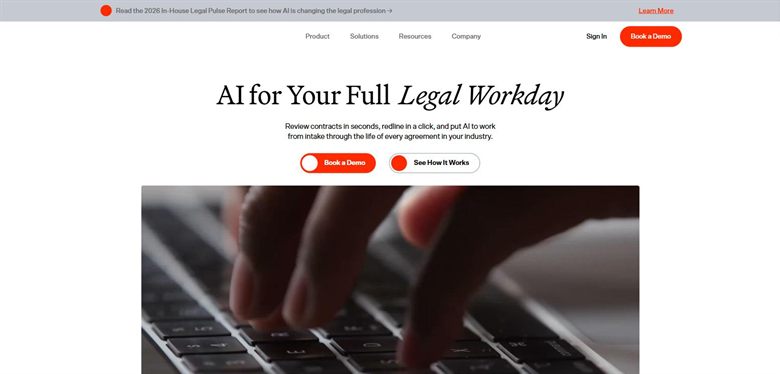
The verdict: The nearest thing to a straight replacement. Word integration, review against standards, suggested revisions with reasoning attached. Built by lawyers, and the quality of the suggested positions shows it.
Pricing: No public list price, and we could not source a reliable reported figure. Sales-led and quoted on seat count and playbook scope.
Standout features:
- Word integration for review and redlining
- Pre-built position libraries by agreement type
- Explanations attached to each suggestion
- Review against your own standards
Limitations: No published price and no reported figure we could stand behind, so you cannot tell whether it is cheaper than Spellbook without entering a sales process, which is a poor trade if price was your reason for looking. Coverage is thinner on bespoke agreements than on common commercial ones.
2. GenieAI: Best for teams for whom the price was the problem
8.6 out of 10 how this is calculated
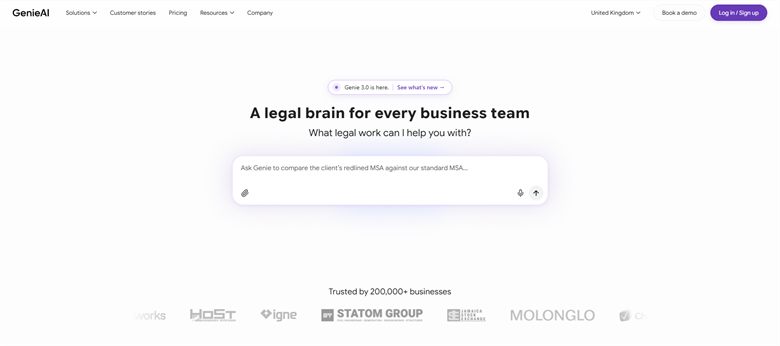
The verdict: The obvious answer if the per-seat cost drove you here. A free tier with no time limit means you can establish whether the output is good enough on your own documents before committing anything.
Pricing: Permanent free plan with no time limit. Pro $75 a month for one user, Business $320 a month for five, Enterprise from $600 a month with SSO, API access and an SLA.
Standout features:
- Drafting, review and negotiation in one workspace
- Risk rated red, amber or green per clause
- Microsoft Word add-in that preserves native track changes
- Plain-language explanation of what a clause does
- Free tier with no time limit
Limitations: It is built for business teams contracting regularly, not for the qualified reviewer working inside Word that Spellbook assumes, and that is why Spellbook leads this page: a lawyer who wants to stay in Word will find it faster and closer to their workflow. There is also no signature and no repository.
3. Robin AI: Best for consistency across a team
7.9 out of 10 how this is calculated
The verdict: Solves a different problem to Spellbook and often the one people actually had. Spellbook makes one lawyer faster; this makes five lawyers consistent, which matters more once more than one person negotiates.
Pricing: Subscription tiered by features and volume, reported from around $500 a month for small teams, with enterprise pricing set on contract volume.
Standout features:
- Playbook of agreed positions with fallbacks
- Redlining against your standards rather than generic ones
- Word and browser workflows
- Human legal support on higher tiers
Limitations: The playbook has to be built before the tool earns anything, so the first months cost more time than Spellbook ever did. At around $500 a month it is more expensive than a small Spellbook seat count, and the value only appears once several people are using the same positions.
4. Wordsmith: Best for in-house teams fielding repeat requests
7.2 out of 10 how this is calculated
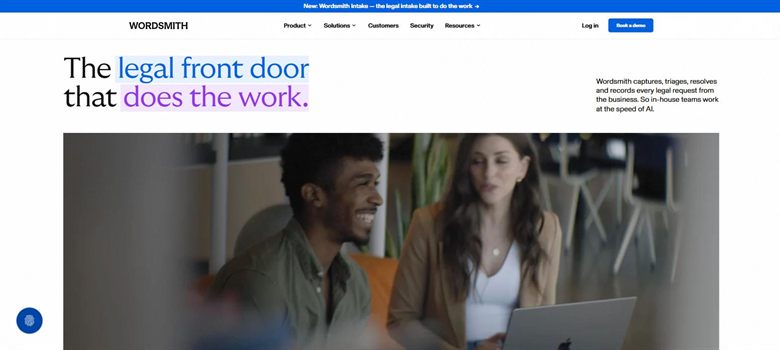
The verdict: Aimed at the in-house team whose day is interruptions rather than drafting. If the business keeps asking the same question, this answers it without a lawyer writing the same reply again.
Pricing: No published list price. Reported at approximately $450 per user a month, which is the top of the per-seat range in this category.
Standout features:
- Generation and review from your own precedent
- Answers policy questions alongside producing documents
- Integrations with Slack and email
- Built for in-house rather than firm workflows
Limitations: At a reported $450 per user a month it is more than twice Spellbook's mid-range, so it is not the answer if cost drove you here. It is also a younger product with a shorter track record than anything else on this page.
5. LegalFly: Best for drafting with a platform underneath
6.5 out of 10 how this is calculated
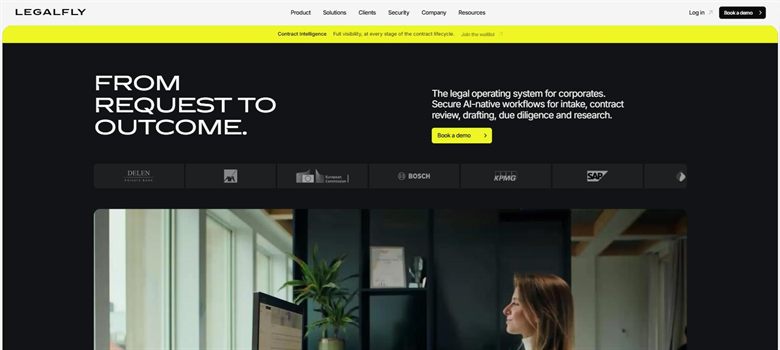
The verdict: Sits between the add-ins and the platforms. Useful if what you wanted from Spellbook was drafting help that did not stop at the document, with anonymisation and workflow around it.
Pricing: No published list price. Reported at approximately $75 per user a month plus a platform fee, so the per-seat figure understates the total for a small team.
Standout features:
- Drafting and review with workflow around it
- Anonymisation before documents reach the model
- Multi-language coverage across European jurisdictions
- Repository alongside drafting
Limitations: The platform fee on top of the per-seat rate is not published, so the reported $75 is a floor rather than a price and small teams can end up paying more per head than at Spellbook. Word integration is present but less polished than the tools built around it.
6. Luminance: Best for analysis across a whole estate
6.1 out of 10 how this is calculated
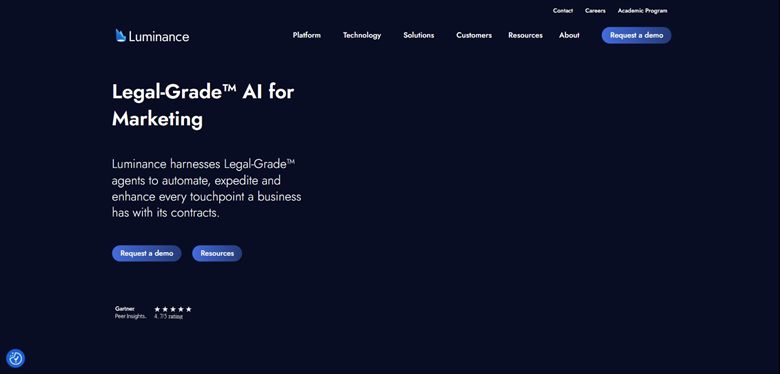
The verdict: A different tier of purchase. Worth looking at only if the reason you outgrew Spellbook was that the questions moved from this document to all our documents.
Pricing: Published list price of approximately $41,340 a year for 1,000 documents with unlimited users. Enterprise deployments are reported from around $25,000 a year depending on volume and modules.
Standout features:
- Analysis across the whole contract estate
- Anomaly detection against learned standards
- Unlimited users on the published tier
- Coverage across many languages and jurisdictions
Limitations: At roughly $41,340 a year it is an order of magnitude above a small Spellbook deployment, and it is priced by document volume rather than seats, so a team drafting a few large agreements pays for capacity it cannot use.
7. Harvey: Best for large firms buying across practice areas
5.3 out of 10 how this is calculated
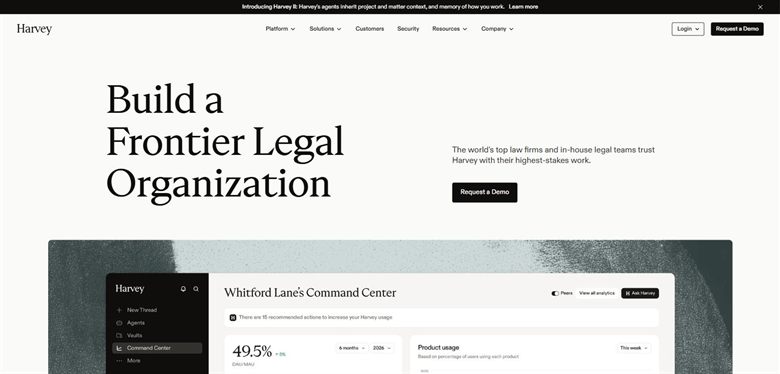
The verdict: Listed because it is the name people raise, not because it is a realistic swap. It is a partnership decision rather than a software purchase, and almost nobody leaving Spellbook is buying this instead.
Pricing: No public list price. Reported annual contracts run approximately $50,000 to $290,000 depending on firm size and practice-area coverage.
Standout features:
- Coverage across multiple practice areas
- Research, drafting and analysis in one system
- Firm knowledge management
- Custom workflows per practice group
Limitations: The reported floor of around $50,000 a year exceeds what most Spellbook customers spend on all software combined. It also does not license the Lexis or Westlaw corpora, so authority-heavy research still routes back to an incumbent subscription on top.
How we chose
- Whether it works inside Microsoft Word, which is the single feature people most miss when they leave.
- Price against Spellbook's reported $99 to $199 per user a month, and whether there is a seat minimum.
- Whether it does more than drafting, since that is the second most common reason for looking.
- Whether a non-lawyer can operate it, which Spellbook does not really allow.
- What you give up: benchmarked market-standard positions are genuinely hard to replicate.
- We did not score Spellbook itself. This is a page about the alternatives, and a page that ranks the incumbent last to justify the exercise is not worth reading.
Frequently asked questions
What is the best alternative to Spellbook in 2026?
LegalOn for the closest like-for-like, with Word integration and a deeper position library. GenieAI if the per-seat price was the problem, since it has a permanent free tier. Robin AI if the real issue was several people taking different positions on the same clause.
Why do people look for Spellbook alternatives?
Three reasons in roughly this order. The per-seat price, reported at $99 to $199 a month and around $350 on enterprise plans with a ten-seat minimum. The scope, since it drafts and reviews but holds no repository and runs no approvals. And the assumption of a qualified reader, which makes it a poor fit for a commercial team without legal support.
Is there a cheaper alternative to Spellbook?
GenieAI publishes a free plan rising to $75 a month, which is below Spellbook's reported floor. LegalFly is reported at about $75 per user plus an unpublished platform fee. LegalOn publishes nothing at all, so whether it is cheaper cannot be established without a quote.
Which Spellbook alternatives work inside Microsoft Word?
All of them do. LegalOn, Wordsmith, Robin AI and GenieAI all offer Word workflows, and GenieAI preserves native track changes. Word integration is not the axis that separates them; who the tool expects to be reading the output is.
How much does Spellbook cost?
No published list price. Reported at approximately $99 to $199 per user a month, rising to around $350 per user on enterprise plans with a ten-seat minimum. A seven-day trial is offered, which is the cheapest way to establish whether you have a reason to leave.
Can a commercial team use Spellbook without a lawyer?
It is not designed for that. Suggestions are presented for a reader who can judge whether a market-standard position suits this particular deal. Tools that flag risk in plain language, rather than proposing wording, tend to serve a non-legal user better.
Should I switch from Spellbook at all?
Only if one of the three reasons above genuinely applies. It is a strong product at what it does, and the most common outcome of a switch made without a specific complaint is paying a similar amount for a tool your team knows less well.